
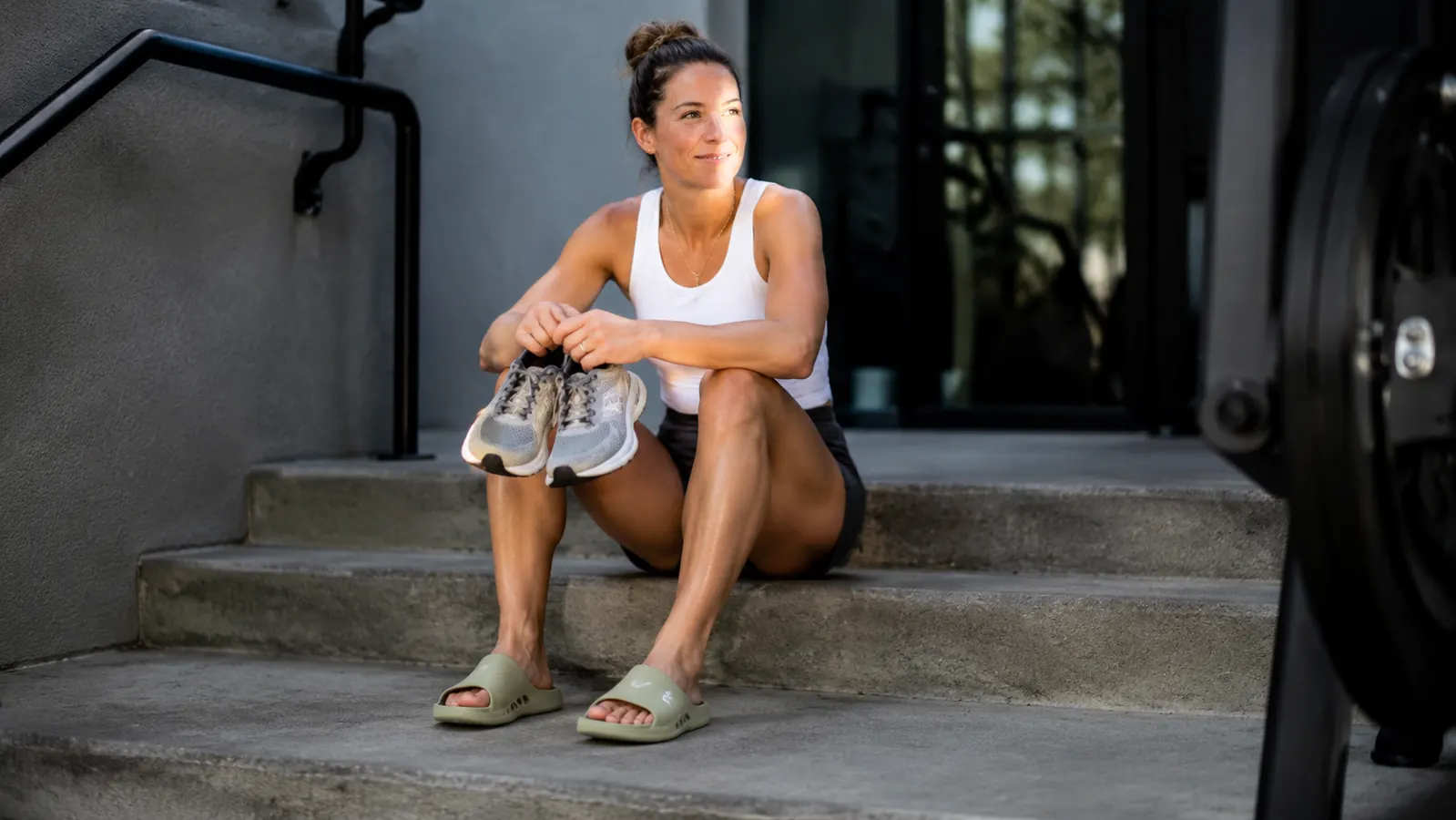
If you finish a hard run or a long shift and your first instinct is to kick off your shoes and walk around in socks on a tile floor, I get it. It feels like relief. But here is what is actually happening: your plantar fascia is already inflamed, your arch is fatigued, and bare feet on a hard surface are giving it zero support at the worst possible moment. That is the cycle that turns normal post-workout foot soreness into the kind of morning stiffness that makes the first ten steps out of bed feel like walking on gravel. It is not injury, not yet. But left alone, night after night, it becomes the thing that quietly limits how often you can train.
Recovery sandals fix that problem. Not by doing anything complicated, but by keeping your arch supported and your heel cushioned during the hours right after training, when your feet are most vulnerable. The OOFOS OOahh Recovery Slide is the one I recommend most often to the people I coach, including a nurse named Dana who works 12-hour hospital shifts and runs half-marathons on her days off. She told me it was the single change that finally made her feet feel okay again by morning. This guide walks you through exactly how to use recovery sandals so you get the same result.
Your feet are sore right now. Here is the recovery sandal that changes that by tomorrow morning.
The OOFOS OOahh has 4.4 stars from over 32,000 verified buyers, including runners, nurses, and lifters. The OOfoam footbed absorbs 37% more impact than standard foam. If you are on your feet all day and your feet ache by evening, this is the tool that addresses the root cause.
Amazon Check Today's Price on Amazon →Step 1: Put Them On Within 15 Minutes of Finishing Your Workout or Shift
Timing is the part most people miss. They shower, eat dinner, sit on the couch for an hour, and then slip on their recovery footwear before bed. By that point, you have already lost the window. The first 15 to 20 minutes after intense activity or prolonged standing is when your feet are most inflamed and when the right footwear does the most work. Blood is still moving to the area, your tissue is warm, and proper arch support at that exact moment helps interrupt the inflammatory cycle before it sets in fully.
The practical move is to keep your recovery sandals in your gym bag, at your locker at work, or right next to the door you come home through. The moment your workout shoes come off, your recovery slides go on. I tell my clients to think of it like a relay baton. One shoe hands off to the other immediately. There should be no barefoot gap on hard floors in between.
For shift workers, this means keeping them in your car or your work bag and putting them on during your last break of the shift, not just when you get home. If your shift ends at midnight and you drive 20 minutes home in regular shoes and then spend another 30 minutes winding down before you change footwear, you have effectively skipped the recovery window for that day. The timing matters more than the total duration.
Step 2: Make Sure the Fit Is Right Before You Rely on Them
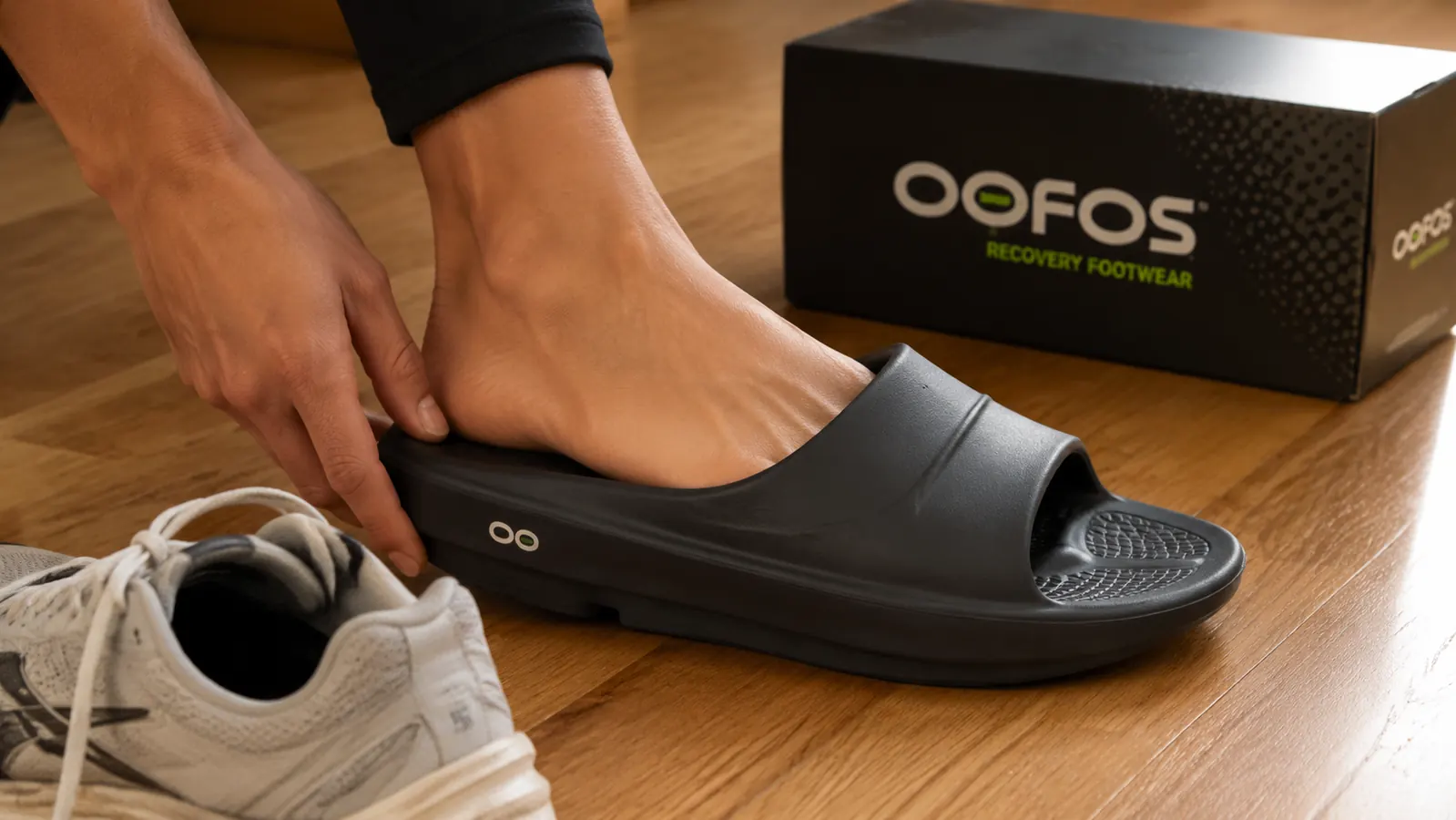
Recovery sandals only work if the arch lands where your arch actually is. This sounds obvious, but a lot of people grab a size that is too big because they want the slide to feel roomy. When a recovery slide is too large, your foot shifts forward on the footbed and your arch sits behind the support contour instead of on top of it. You end up with a flat cushion, not a functional recovery tool.
For the OOFOS OOahh, the recommendation is to size down if you are between sizes. The footbed has a defined arch ridge and a deep heel cup, and both need to align with your foot anatomy to do their job. Stand in them with your full body weight before committing. Your heel should sit fully inside the cup. The arch contour should make light but noticeable contact with the underside of your foot. If you feel pressure directly under your heel bone but nothing under your midfoot, the size is off.
Step 3: Wear Them for at Least 60 Minutes After Activity, Not Just the Walk From the Gym to the Car
A recovery slide is not a transition shoe. It is not something you wear for two minutes across a parking lot and then swap for regular flip-flops. The arch support and impact-absorbing foam need time to do their work. You want your feet inside these recovery sandals for at least 60 continuous minutes after your training session or work shift ends. Two hours is better. If you are home in the evening, wear them through dinner and into the early part of the night.
One of the most consistent things I hear from people who are disappointed by recovery sandals is that they wore them for ten minutes and did not feel a difference. That is not how they work. The benefit is cumulative over the session of wear. Your plantar fascia tension releases gradually, not instantly. Think of it less like icing a bruise and more like stretching a tight muscle. You hold the position and let the tissue respond over time.
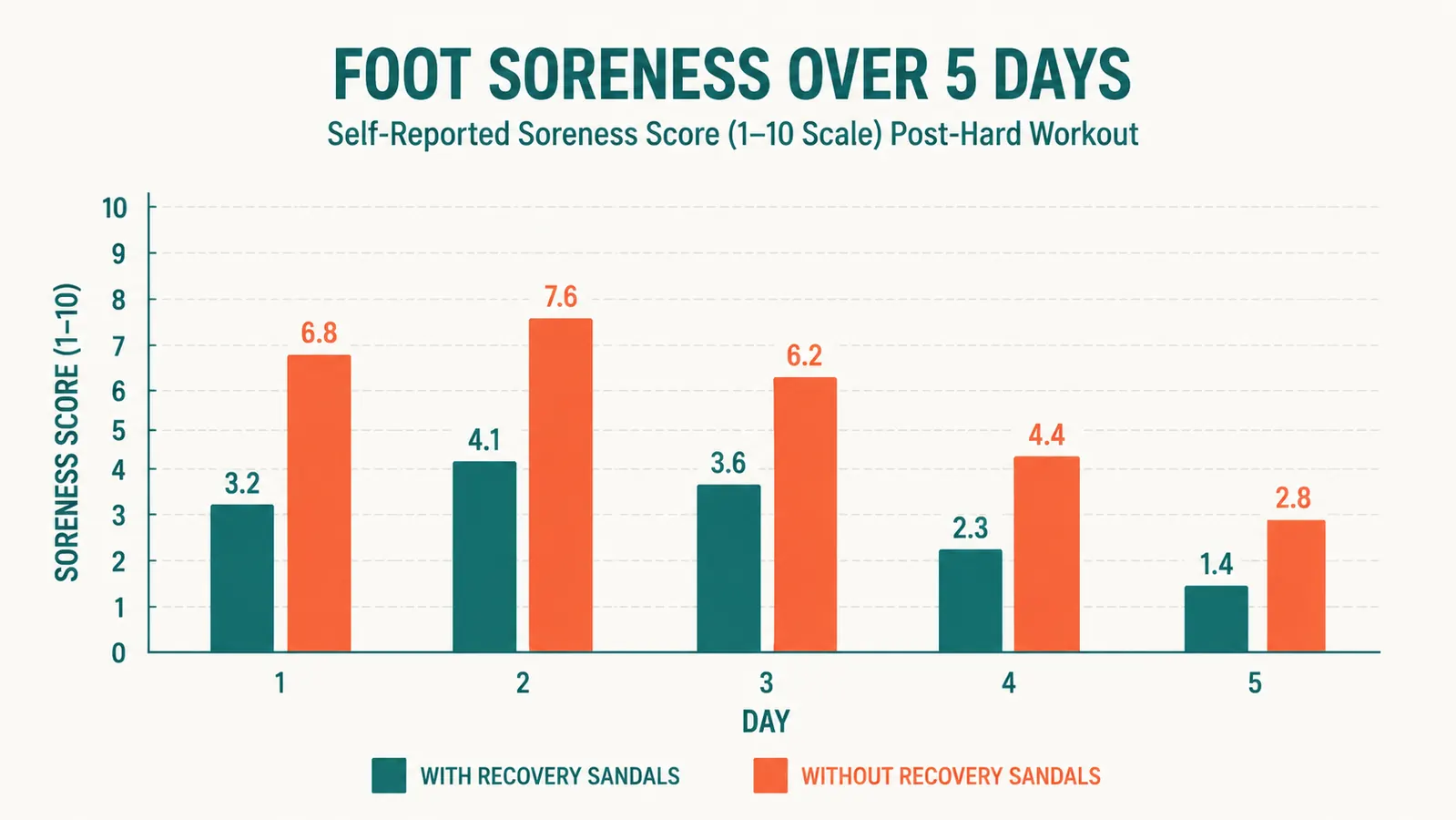
A useful benchmark: if you run four or five days a week and your feet ache consistently, commit to wearing your recovery sandals for a minimum of 90 minutes every post-run evening for two full weeks before you judge whether they are working. Most people notice a meaningful change in morning stiffness within five to seven days of consistent use at that duration. If you are only wearing them for 20 minutes here and there, you are not giving the tool a fair test.
The benefit is cumulative. Wear them through dinner and the first part of the evening, not just the walk to the car. That 90 minutes of post-workout support is what determines how your feet feel the next morning.
Step 4: Use Them on Recovery Days and Rest Days Too
Your feet do not take rest days the same way your legs do. You are still walking to the kitchen, to the car, through the grocery store. And if you are doing that barefoot or in unsupportive shoes, you are undoing the recovery work from the day before. This is especially relevant for anyone with plantar fascia tightness, because the fascia shortens overnight and the impact of those first few steps in the morning re-tears tiny fibers before the tissue has fully recovered.
On rest and recovery days, use your recovery sandals as your default indoor footwear. Morning routine, post-shower, light errands around the house. If you are someone who deals with that sharp first-step morning pain, slipping on your OOFOS before your feet even touch the floor can make a noticeable difference within three to five days of consistent use. I have had clients describe it as a turning point, and I understand the reaction even though the mechanism is simple. You are just stopping the daily micro-trauma that was resetting the injury cycle every morning.
Step 5: Pair Them With Two Minutes of Foot Work Each Evening
Recovery sandals handle the passive side of foot recovery. They support and cushion while you move around. But adding a brief active component each evening makes the whole system work better. Two minutes of calf stretching and one minute of plantar fascia rolling while you are already wearing your recovery slides creates a compound effect. The arch support keeps your foot in a neutral position while your calf releases tension, which directly reduces the load pulling on your plantar fascia.
The drill is simple. Stand facing a wall in your recovery sandals. Step one foot back, keep the heel on the ground, and lean into the wall until you feel a pull in your calf. Hold for 30 seconds, then switch sides. Do that twice. Then sit down and roll a tennis ball or frozen water bottle under your arch for 60 seconds per side. That is the full routine. Five minutes total. Do it before bed while you are watching something on your phone and it becomes automatic within a week. The combination of supported movement in your recovery footwear and this brief active work is what gets the best results, faster than either one alone.

What Else Helps
Recovery sandals address the mechanical side of foot soreness, but a few other habits reinforce the results. First, if you are transitioning from barefoot or minimal footwear, give your feet three to four weeks before expecting full relief. Your plantar fascia and foot intrinsic muscles need time to adapt to proper support. Second, hydration matters more than most people expect for connective tissue recovery. Fascia tissue is largely water-dependent for its elasticity, so chronically dehydrated athletes tend to have stiffer, more irritated feet. Third, if you are a nurse or teacher logging eight to twelve hours on concrete or tile, recovery sandals are your after-shift tool, but your during-shift footwear matters too. A well-cushioned clinical shoe during the day combined with the OOFOS after your shift gives you full-day coverage and a genuine chance for the tissue to recover overnight. Fourth, sleeping with your feet in a neutral or slightly dorsiflexed position helps. Pointed toes all night shorten the calf and fascia together, which is why morning soreness is almost always worst right when you stand up. A simple pillow under the lower half of your shins, keeping your feet from dropping, costs nothing and takes about five seconds to set up. Combine that with your recovery sandals in the evening and you are giving your feet the best possible overnight window to reset.
If you want to go deeper on why recovery footwear works, the full review of the OOFOS OOahh covers the foam technology and long-term durability in detail. And if you are weighing whether recovery slides are worth adding to your bag at all, the breakdown of 10 reasons recovery slides belong in every athlete's bag makes the case with specifics. For a head-to-head comparison with the Hoka Ora if you are deciding between the two top options, the OOFOS vs Hoka Ora comparison gives you the honest side-by-side on cushioning, arch support, and durability.
You have the steps. The OOFOS OOahh is how you put them into practice tonight.
Over 32,000 runners, nurses, and gym-goers have made it their go-to post-workout recovery sandal. Available in a wide range of sizes for men and women. Check the current price on Amazon and see if your size is in stock.
Amazon Check Today's Price on Amazon →