
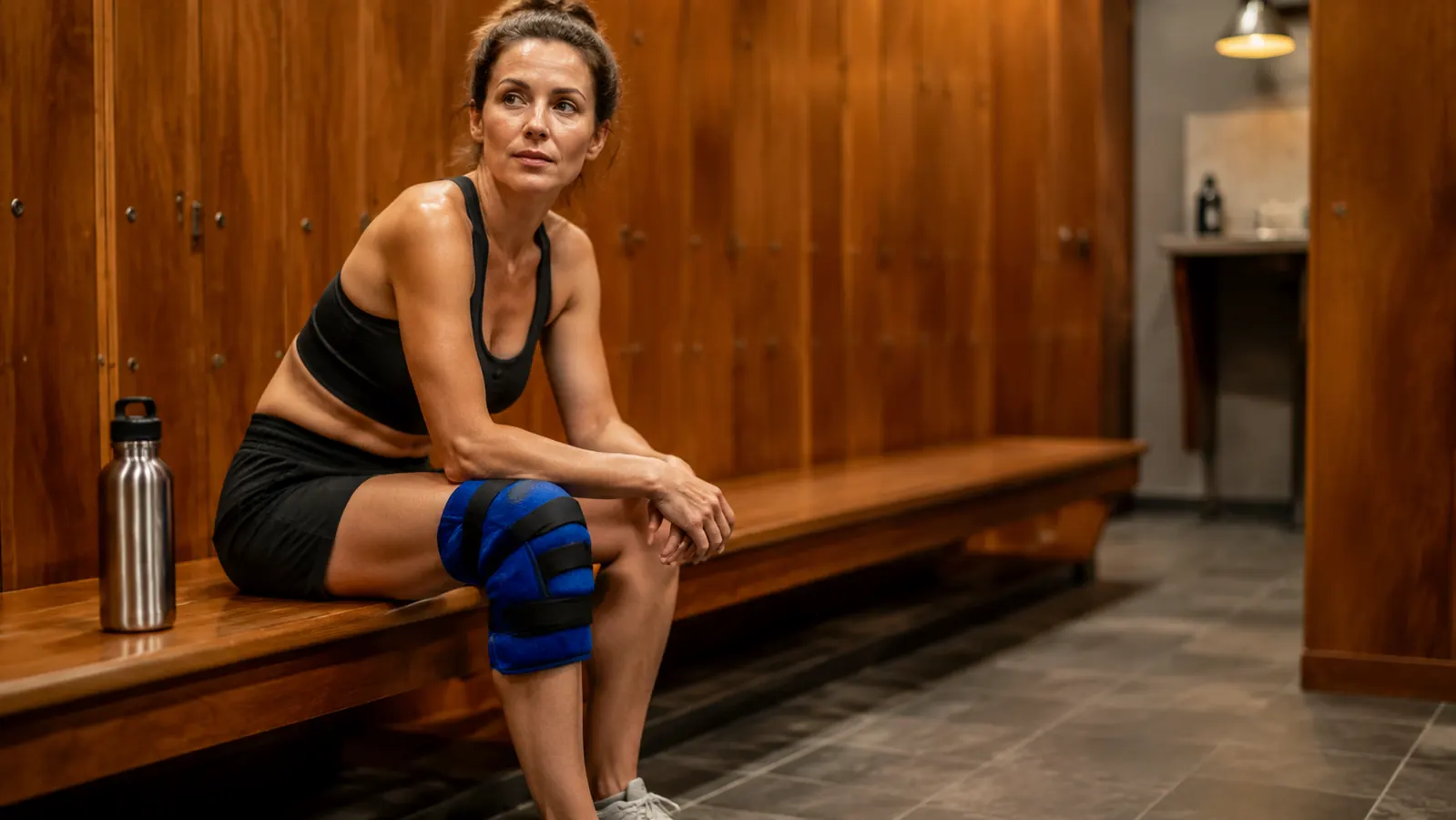
My left knee has been the problem child of my body for years. Not a dramatic injury, just the slow accumulation that happens when you spend a decade teaching group fitness, then keep training hard on a schedule that never really leaves enough room for real recovery. After a heavy leg day, the swelling was predictable: by evening my knee felt thick and warm, and by the next morning the stiffness made the first flight of stairs feel twice as tall as usual. I had tried the bag-of-frozen-peas routine. I had tried a generic gel pack from the drugstore that slid around every time I moved and went warm after twelve minutes. Neither one let me actually rest and ice at the same time. When the REVIX ice pack wrap showed up, I decided to give it a real eight-week test, strapping it on within twenty minutes of finishing every single leg session. What I found is worth sharing honestly, because it is not a perfect tool, but it is a genuinely useful one.
The Quick Verdict
A well-fitted, hands-free cold therapy wrap that holds cold long enough to matter and stays in place through an entire icing session. Not a miracle, but a real upgrade over DIY cold packs for anyone icing consistently.
Amazon Check Today's Price →Your knee is still swollen from Tuesday. Stop making do with a bag of frozen peas that goes warm in ten minutes.
The REVIX gel ice wrap fits snugly, stays put, and holds cold for 25 to 30 minutes without you touching it. Over 24,000 reviewers on Amazon agree it works. Check today's price and see which size fits your situation.
Amazon Check Today's Price on Amazon →How I Set Up the Test
I train three days a week, with legs always on Monday and Thursday. Both sessions involve squats, Romanian deadlifts, walking lunges, and leg press. My left knee reliably swells more than my right, something my sports medicine doctor confirmed is just the way my knee tracks under load. I am 41, about 147 pounds, and I have been training consistently for sixteen years, so this is not a beginner recovery experiment. I know what my baseline looks like. For eight weeks, I froze the REVIX gel insert overnight, pulled it from the freezer immediately after each leg session, secured the wrap around my knee, and sat for twenty minutes while I did something low-key like returning texts or watching something on my phone. No elevation, no compression from another source, just the wrap. I rated my soreness at the twenty-four-hour and forty-eight-hour marks on a simple one-to-ten scale each week. I also tracked whether I could do stairs without gripping the railing the next morning, which sounds funny but was a real quality-of-life marker for me.
One thing I want to be upfront about: this is not a controlled lab study. I did not change my training volume or my sleep during the eight weeks, but life is not perfectly controlled. Some weeks I was more stressed, some weeks I slept better. I am reporting what I observed, not what a randomized trial would prove. With that said, the pattern was consistent enough that I am confident the wrap played a real role.
What the REVIX Wrap Actually Feels Like to Use
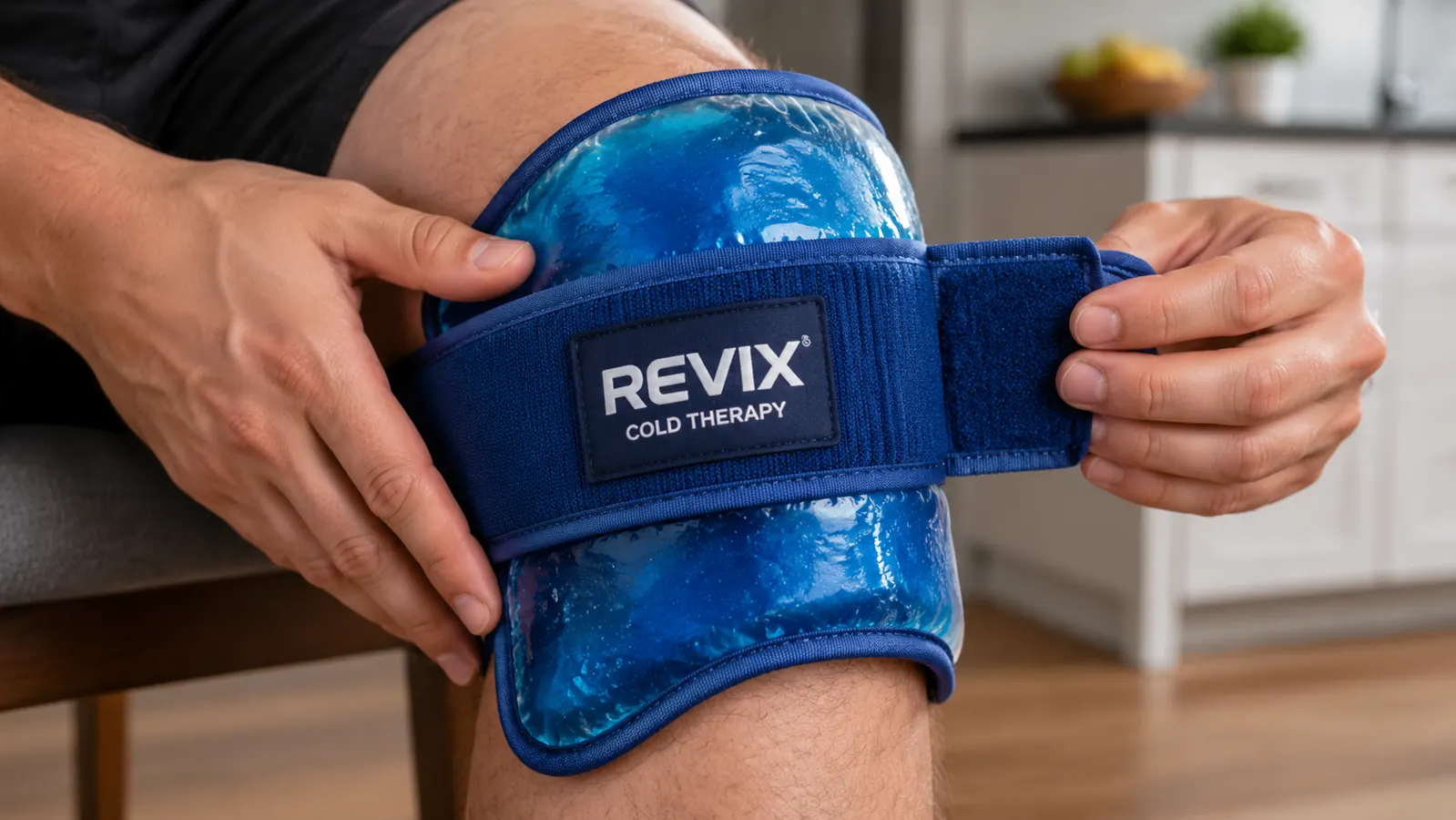
The first thing I noticed is the fit. The wrap is specifically contoured for the knee, not just a flat rectangle that you drape over your leg. There is a cutout that lets the gel pack sit against the joint itself rather than perched on top of it. The two velcro straps cross above and below the kneecap, and they hold under tension without cutting off circulation. I could walk slowly to the couch while wearing it, which sounds minor but was a real improvement over the old gel pack that required me to hold it in place with my hand.
The gel insert is thick and flexible even when frozen solid. Most cheap gel packs go semi-rigid in the freezer and feel like pressing a hockey puck against your skin. The REVIX insert is still pliable when you pull it out, which means it conforms to the contour of the knee rather than bridging across the high points and leaving air gaps. The first contact is cold without being brutal. I have used it directly against bare skin every time without any issue, though the product recommends a thin layer of fabric underneath if your skin is sensitive.
What Changed Over Eight Weeks
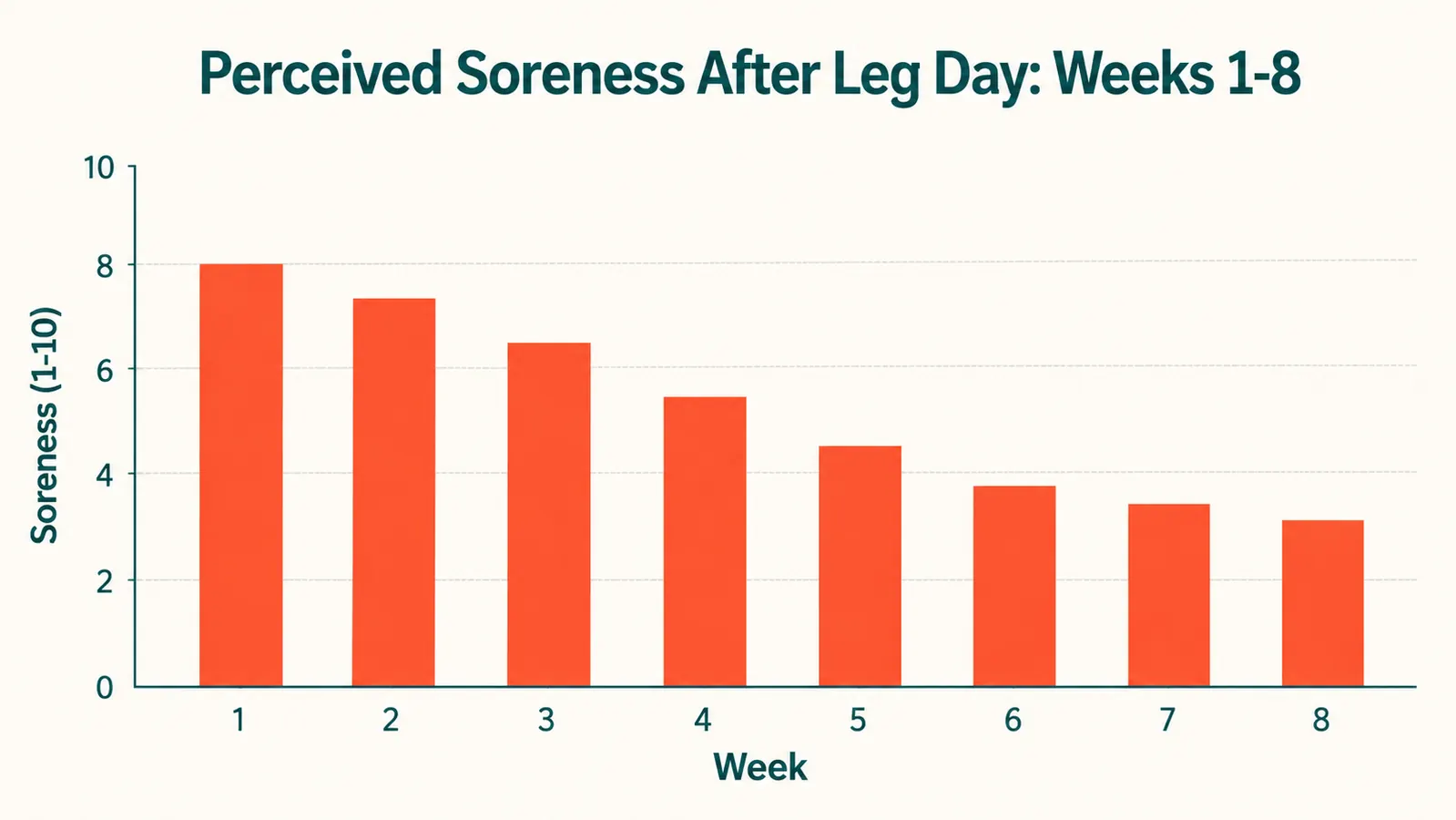
Weeks one and two were the most noticeable. My twenty-four-hour soreness rating dropped from a consistent seven or eight in the weeks before I started the test down to a five or six. My knee still felt worked, but the sharp, tight swelling I usually had by evening was noticeably less. The stair test was better too, though I still needed a moment at the bottom of the first flight on Tuesday mornings.
By weeks three and four, I started to notice the forty-eight-hour recovery felt different. Normally the second day after a heavy leg session is my worst. With consistent icing right after the session, my forty-eight-hour soreness averaged around a four, compared to a six or seven in my pre-wrap baseline. That is not dramatic, but in practical terms it meant I was able to do a light walk or a yoga session on Wednesday instead of spending the day stiff. That matters a lot when you also have a household to run and a job that keeps you on your feet.
Weeks five through eight saw diminishing but still real returns. Soreness was running at a three to four at twenty-four hours. The visible swelling on my knee, which I tracked by checking whether my knee sleeve fit the same way it always had, was minimal by week six. I started to feel like I was training more sustainably, meaning I was not carrying a deficit of inflammation into each session. The chart below shows the trend across all eight weeks.
By week six, the visible swelling that used to greet me the morning after leg day was just gone. Not because I trained less hard. Because I stopped treating cold therapy as optional.
The Honest Limitations
The wrap is sized specifically for the knee. If you want to ice your hamstring insertion or your quad, this is not the right tool. REVIX makes wraps for other body parts, but this particular product does one thing. That is fine, but worth knowing before you buy.
The cold lasts twenty to thirty minutes in my testing. After that, the insert is no longer cold enough to matter and you need to put it back in the freezer or swap in a second insert. REVIX sells pairs, which is smart if you train twice a day or want to do back-to-back icing sessions. With one insert, you are done after one round. For most people one round is plenty, but if you have been told to ice for forty-five minutes post-workout, budget for two inserts or two freezer cycles.
The velcro has also picked up some lint over eight weeks of use, which reduces its grip slightly. It still holds, but if I had to do it again I would be more careful about where I store it so the velcro does not collect debris. That is a minor maintenance note, not a defect.
How It Compares to What I Used Before
The bag-of-frozen-peas method is free, which is its only real advantage. A bag of peas goes lukewarm in ten to twelve minutes, does not stay over the knee without being held in place, creates moisture on the outside of the bag as it warms, and cannot be worn while you do anything else. The REVIX wrap costs about the same as two bags of peas and is reusable indefinitely. The comparison is not even close once you have tried both seriously.
The generic drugstore gel pack I had before was better than peas but worse than the REVIX in every dimension that mattered. It did not contour to the knee, the elastic band that held it in place created a ridge of pressure above my kneecap, and the gel was thinner so it went warm faster. The REVIX is purpose-built for this joint in a way that generic alternatives are not.
Who Gets the Most Out of This Wrap
If you do any form of lower body training and your knee regularly feels hot or puffy after sessions, this wrap is a reasonable investment. That includes runners who log enough miles to feel it in the joint, lifters who push their squat and lunge volume, nurses or teachers who are on their feet for eight to twelve hours and then try to get a workout in, and parents who combine kid-chasing with structured training and do not have time for elaborate recovery setups. The twenty-minute hands-free icing session is the key feature. If cold therapy has to be completely passive for you to actually do it, this removes the friction.
It also works well for anyone recovering from minor knee procedures or managing a chronic condition under a doctor's guidance. Nearly a quarter of the reviews on Amazon mention post-surgery use. I cannot speak to that context from personal experience, but the consistent design and secure fit make sense for it.

What I Liked
- Contoured fit stays centered over the kneecap without shifting during twenty-minute sessions
- Gel insert stays flexible even when frozen, conforming to the knee rather than bridging across it
- Hands-free design means you can ice and do something else at the same time
- Cold lasts a solid twenty to thirty minutes, which covers the effective icing window
- Over 24,000 reviews on Amazon with a 4.6 average, strong long-term reliability signal
- Reusable indefinitely, so it pays for itself quickly versus disposable cold packs
Where It Falls Short
- Designed specifically for the knee, not adaptable to hamstrings, quads, or calves
- One insert lasts about twenty to thirty minutes; a second session requires a second freeze cycle
- Velcro picks up lint over time and needs occasional care to maintain grip
- Does not include compression beyond the strap fit, so it is cold therapy only, not cold plus compression
Who Should Skip It
If you are dealing with a serious knee injury, you need to follow your doctor or physical therapist's protocol, not a product review. Cold therapy is generally safe for post-workout soreness and mild inflammation, but it is not the right tool for every knee situation, and using it wrong can delay healing in certain injury types. Please get that guidance from a professional before adding anything to your routine.
If your soreness is mainly in your hamstrings, glutes, or calves rather than your knee, this specific wrap is not going to address it. You would be better served by a different cold therapy tool or a separate wrap designed for the area that actually bothers you. And if you rarely train hard enough to generate meaningful knee inflammation, you probably do not need this. It is a targeted recovery tool for a specific problem, not a general-purpose wellness product.
Eight weeks in, this is the first cold therapy tool I have actually used consistently after every session.
If your knees swell after leg day and you have been making do with improvised fixes, the REVIX ice pack wrap is the upgrade that actually fits the joint, stays in place, and holds cold long enough to be useful. Check today's price on Amazon and see if it ships to you.
Amazon Check Today's Price on Amazon →