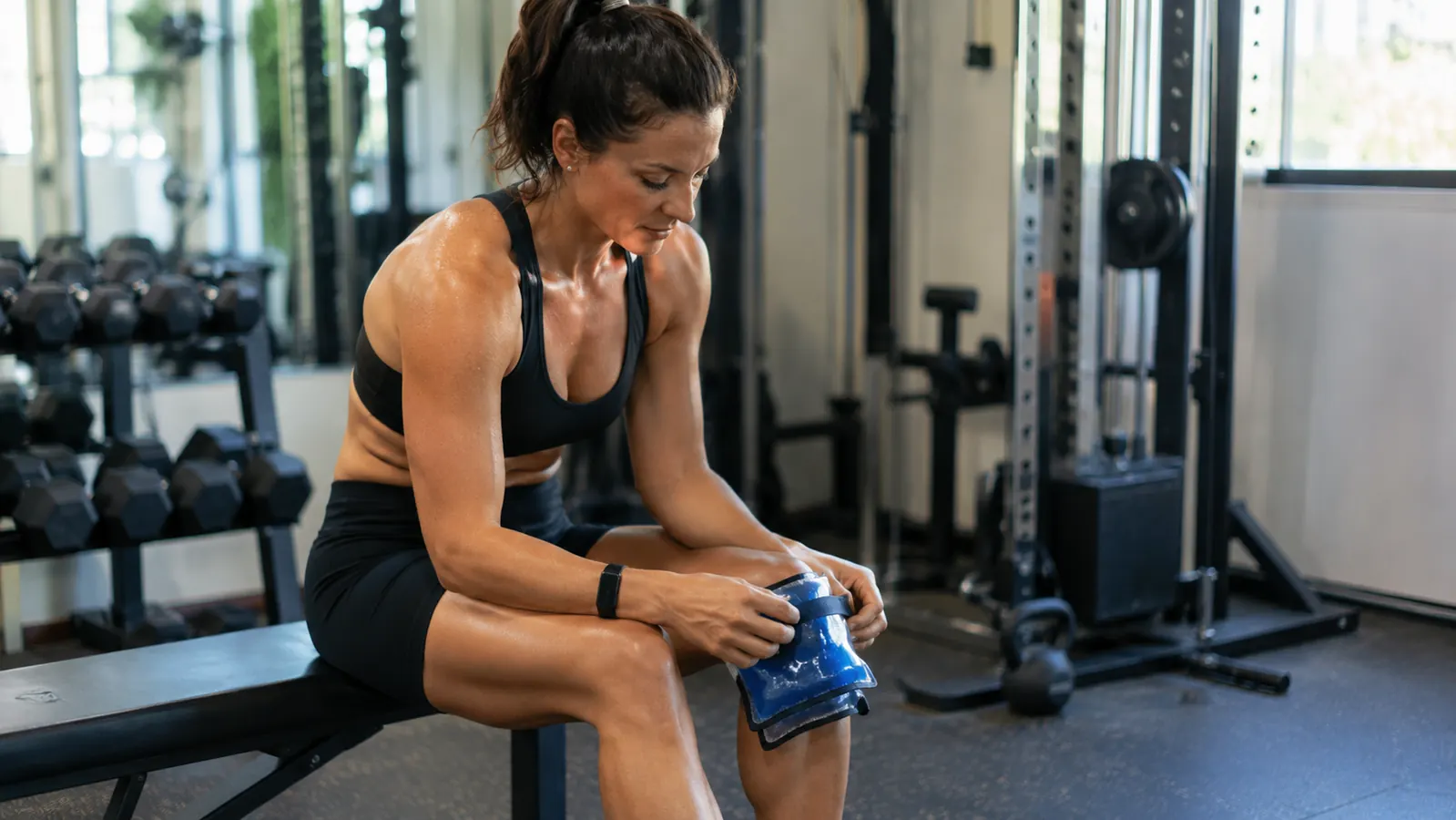
You finished your workout. Your legs feel like concrete and your knee is already starting to swell. So you grab a bag of frozen peas, press it against the joint for a few minutes, and call it good. I did that for years. And I kept waking up the next morning stiff, sore, and wondering why the ice was not helping. Here is what nobody told me: the bag-of-frozen-peas method is not really cold therapy. It is cold, but it is not therapy. The difference comes down to compression, surface contact, and timing, and a quality ice pack wrap handles all three at once. Once I started using the REVIX ice pack wrap the right way, my recovery between leg sessions completely changed. This guide walks you through exactly how to do it.
Note: this guide covers post-workout soreness and general inflammation management. If you are dealing with an acute injury, surgery recovery, or a chronic medical condition, please check with your doctor before starting cold therapy on your own.
Still waking up sore two days after training? The REVIX ice pack wrap is what I recommend for anyone who wants real cold therapy at home.
It conforms to knees, elbows, shoulders, and calves, stays cold for 20 to 25 minutes, and the velcro wrap keeps it in contact with the skin so the cold actually reaches the tissue underneath.
Amazon Check Today's Price on Amazon →Why Most People Get Cold Therapy Wrong After a Workout
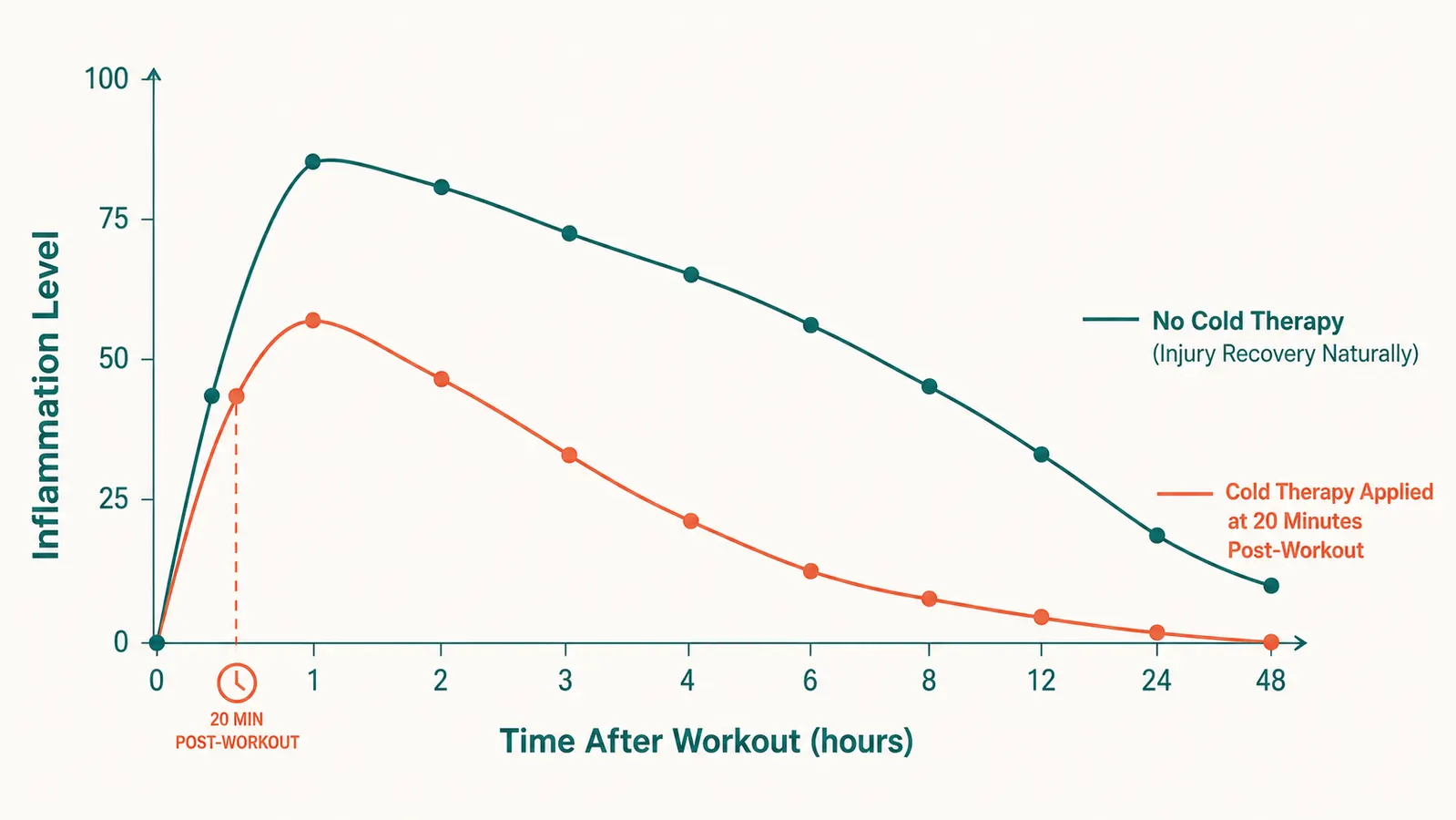
The two biggest mistakes I see are timing and duration. People either ice too late, an hour or more after training, or they go way too long, leaving a cold pack on for 45 minutes thinking more is better. Both approaches backfire. If you apply cold therapy too late, the acute inflammatory response has already peaked and the window where it does the most good has largely closed. If you ice too long, you can numb sensation to the point where you lose the circulatory flushing effect you were trying to trigger in the first place.
The other problem is surface contact. A flat ice pack bag sits on top of curved joints like knees and ankles without actually wrapping around them. You are icing your skin, not the tissue underneath. A gel cold wrap conforms to the contours of the joint, which means the cold penetrates more evenly and the light compression from the strap actually helps push swelling out of the area. That combination is what makes the difference between waking up stiff and waking up ready to train again.
Step 1: Freeze Your Ice Pack Wrap At Least 2 Hours Before You Need It
This sounds obvious, but it catches people off guard constantly. The REVIX gel cold wrap needs at least two hours in the freezer to reach the temperature range where it actually works. Four hours is better. If you train in the mornings, put the wrap in the freezer the night before. If you train after work, pop it in before you leave the house in the morning. Do not try to use it straight from the refrigerator shelf or after only 30 minutes in the freezer. The gel will not be cold enough to do the job, and you will wonder why the cold therapy is not helping.
One practical tip: if you train multiple days in a row, consider keeping two ice pack wraps in rotation. One stays in the freezer while you are using the other. This is especially worth it if you are a nurse, a warehouse worker, or anyone on their feet all day who wants to apply cold therapy both after work and again the next morning before a second shift.
Step 2: Apply the Ice Pack Wrap Within 20 Minutes of Finishing Your Workout
Timing is the variable most people get wrong, and it matters more than almost anything else about cold therapy. The inflammatory cascade that causes delayed onset muscle soreness starts immediately after exercise ends. Your body begins releasing pro-inflammatory signals within minutes of finishing a hard set of squats or a long run. Applying your cold pack wrap within 20 minutes catches this response early, before swelling has a chance to set in and before the tissue temperature has had a chance to rise significantly. The sooner you get cold therapy on the area, the less inflammatory fluid has the chance to pool in the joint.
You do not need to be obsessive about it. Somewhere between 10 and 20 minutes post-workout is the sweet spot. Cooling down, changing your shoes, drinking some water, and then putting the cold wrap on is perfectly fine. What you want to avoid is waiting until you get home, make dinner, sit on the couch for an hour, and then suddenly remember you were going to ice your knee.
Step 3: Place the Cold Wrap Directly Against the Skin and Secure the Straps Snugly
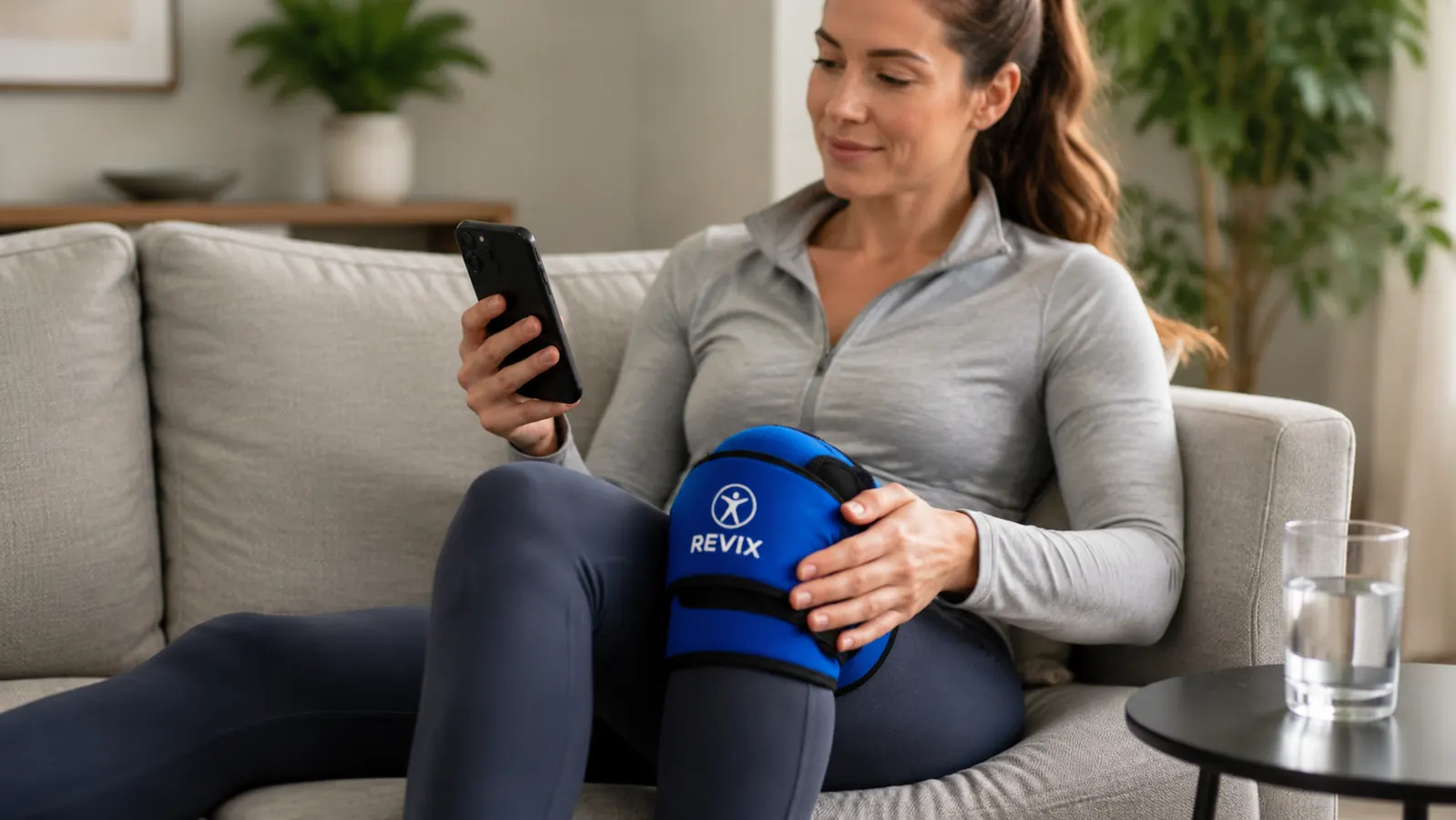
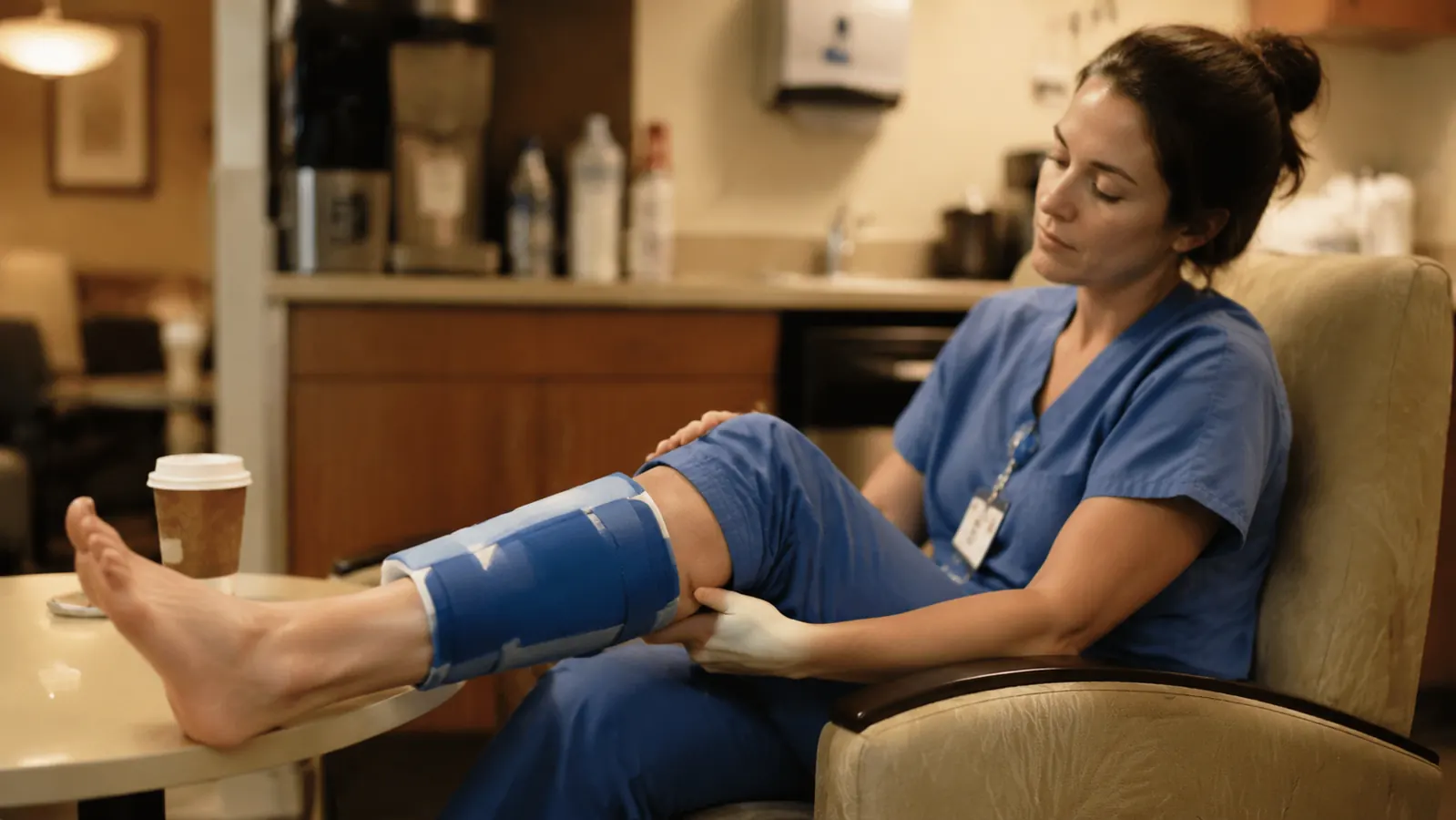
Skin contact matters a lot. Icing over a thick layer of gym shorts or leggings dramatically reduces how much cold actually reaches the underlying tissue. For your knee, shin, or ankle, put the ice pack wrap directly against bare skin. For your shoulder or hip, the same principle applies. The gel insert in the REVIX cold wrap conforms to curved surfaces, so it will not slide off even on a bent knee or a shoulder joint. Secure the velcro straps tight enough to hold the wrap in place, but not so tight that you are cutting off circulation. You should feel the cold and a gentle compression, not tingling or numbness from pressure.
If you want to add an extra layer of circulation benefit, slowly flex and release the joint a few times after securing the wrap. This movement helps push the initial fluid exchange and keeps blood moving while the cold is doing its work. It sounds minor, but when you are dealing with post-leg-day knee swelling, every small edge adds up over a week of consistent use.
The difference between a bag of frozen peas and a proper cold wrap is not just the temperature. It is the compression, the surface contact, and the way you use it. Get all three right and recovery feels completely different the next morning.
Step 4: Keep the Ice Pack On for 15 to 20 Minutes, Then Remove It
Fifteen to twenty minutes is the target range for a single cold therapy session. This duration is long enough to bring tissue temperature down meaningfully and reduce acute inflammation, but short enough to avoid the rebound effect that happens when you leave the cold pack on too long. That rebound, when the blood flow rushes back in after you take the cold wrap off, is actually a good thing. It helps flush the area with fresh oxygenated blood. You want that response. But if you ice for 45 minutes straight, the tissue gets so cold that circulation becomes sluggish and you lose the benefit of the flush entirely.
Set a timer on your phone. Do not just eyeball it. This is especially important if you are sitting on the couch post-workout and there is a decent chance you will fall asleep. Sleeping with a cold wrap on your skin is not going to give you extra recovery benefits. It is going to give you a very cold leg and a confused body that did not get the rebound circulation it needed.
Step 5: Wait at Least 45 Minutes Before Re-Applying
If you want to do a second cold therapy session on the same area the same day, give the tissue at least 45 minutes to return to normal temperature first. This allows the rebound circulation response to complete fully, the tissue to warm back up, and your body to process what happened during the first session. Then you can apply the ice pack wrap again for another 15 to 20 minutes. Most people who train hard will benefit from two sessions on their primary soreness areas, one right after training and one before bed.
For nurses, parents, or anyone doing physical work all day, a second evening session on the knees or lower legs is often where you feel the biggest difference the next morning. The combination of cold therapy and elevation for 20 minutes before sleep does a lot to take the edge off soreness that built up across a full day on your feet.
Which Body Parts Respond Best to a Cold Wrap After Training
Not all post-workout soreness benefits equally from an ice pack wrap. Here is where the REVIX cold wrap does its best work: knees after leg day or running, ankles after court sports or long walks, elbows after heavy pulling sessions, shoulders after pressing and overhead work, and the upper shin area after hard cycling or hiking. These are all areas with significant joint involvement where inflammation builds up quickly and where the wrap's contoured gel insert makes consistent, full-surface contact with the skin.
Lower back soreness and general quad or hamstring muscle soreness are a trickier fit for a wrap designed for joints. For those areas, a flat gel cold pack or a larger cold therapy towel works better because the surface area you are trying to cover is too big and too flat for a knee-shaped gel insert. Know what the tool is built for and reach for it in those situations.
What Cold Therapy Is Not Going to Fix
Cold therapy is genuinely useful for post-workout inflammation management. But it is not a substitute for sleep, protein, or actual rest days. If you are reaching for your ice pack wrap every single night because you feel wrecked after every session, the wrap is managing a symptom, not solving the problem. Similarly, if your knee swells dramatically after every leg session and takes three or four days to settle down, that warrants a conversation with a doctor, not just more cold therapy. The wrap should feel like a helpful tool inside a solid recovery routine, not a band-aid over a bigger issue.
What Else Helps Alongside Cold Therapy
Cold therapy works better when you pair it with a few other habits. Elevating the joint you just iced for 10 to 15 minutes after removing the cold wrap helps drain any remaining fluid by working with gravity. Staying well hydrated keeps the tissue environment healthier so the inflammatory response resolves faster. Light movement the day after a hard session, a short walk, a slow bike ride, or some gentle stretching, keeps circulation moving and prevents the stiffness that builds up when you just sit still for 24 hours. The ice pack wrap is the sharpest single tool in the kit, but the kit itself matters.
If you train three or four days a week and you are struggling to feel recovered by the next session, I would also look at your sleep before adding more cold therapy sessions. Cold therapy helps most when your body already has the raw materials it needs to repair tissue. An ice pack wrap on six hours of sleep is still a net positive, but it is not going to fully make up for what you are missing from rest. Get those two things right first, and the cold therapy on top of them will feel like it is actually working.
If you are ready to actually recover between sessions instead of white-knuckling through soreness, the REVIX ice pack wrap is where to start.
It is the cold therapy tool I recommend for anyone who trains consistently and wants to show up for their next session without dragging. Conforms to your joint, holds cold for a full session, and the velcro straps keep it locked in place. Check today's price on Amazon and see if it fits your budget.
Amazon Check Today's Price on Amazon →