
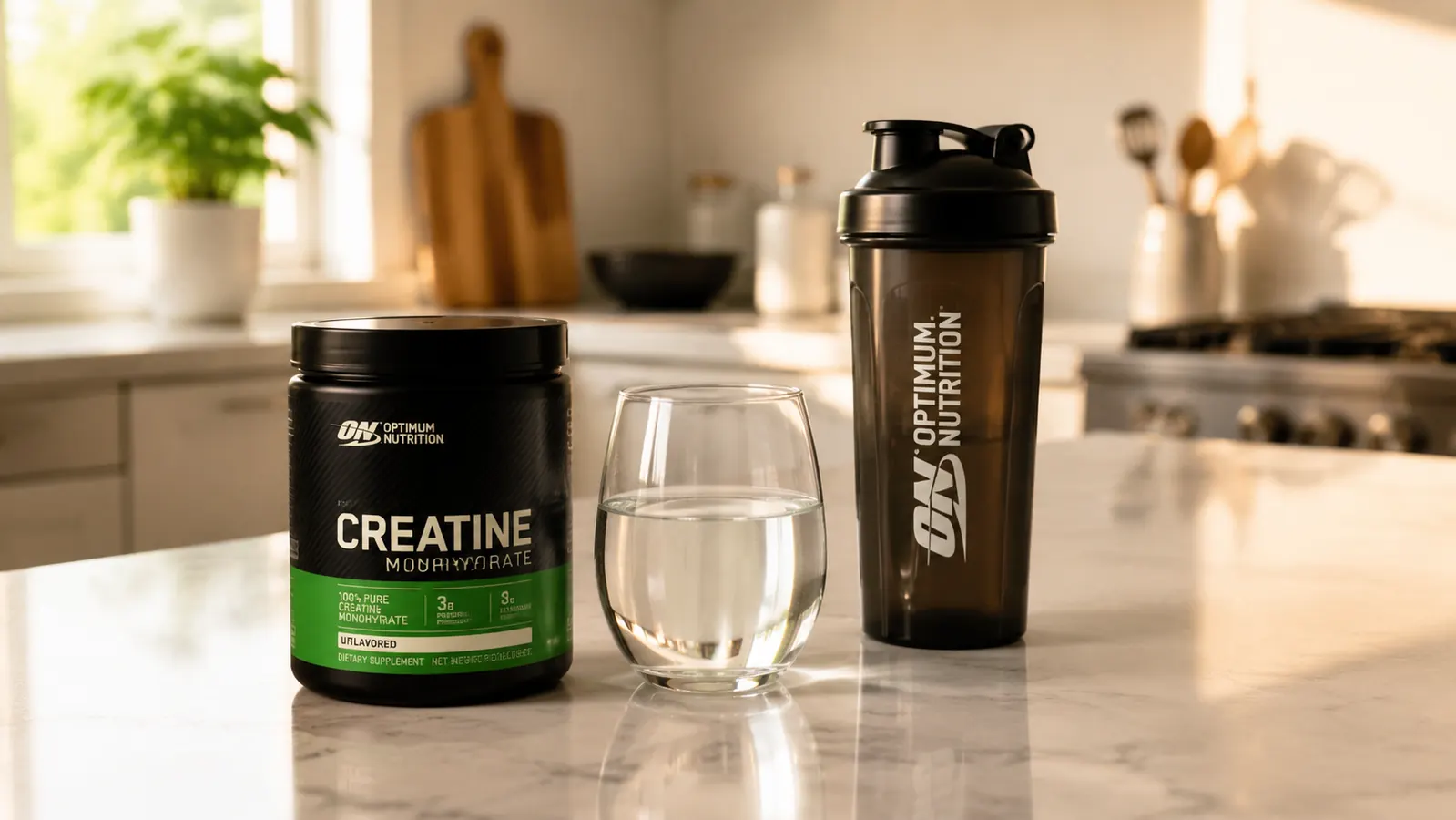
By week three of any training block, I turn into a different person. Not a mean person, just a slow one. My legs feel like they were filled with wet cement overnight, my right shoulder starts complaining, and the 5 AM alarm feels genuinely cruel. I have trained that way for years, assuming it was just the price of being 42 and training four days a week while also working and raising two kids. Then a nurse at my local gym told me she had been taking creatine monohydrate for about four months and her between-session recovery had shifted enough that she stopped dreading her Wednesday workouts. I was skeptical. Creatine always sounded like something for college guys trying to add mass. But I looked at the research, talked to my doctor, and decided to run a 12-week experiment on myself using Optimum Nutrition Micronized Creatine Monohydrate. What I found was not what I expected.
I want to be clear upfront: I am not a scientist, this is not a clinical study, and nothing in this article is medical advice. Creatine is one of the most studied supplements on the market, but how any individual responds varies. Always talk to your doctor before starting a supplement, especially if you have any kidney concerns, take medication, or have a health condition that affects how your body handles water or protein. With that said, here is my honest 12-week log.
The Quick Verdict
Optimum Nutrition Micronized Creatine is the benchmark for a reason. It mixes cleanly, has no taste, costs less than a dollar per week to use, and the research behind creatine monohydrate is more solid than almost any other supplement category. My between-session soreness dropped noticeably by week six, and my rep counts at a given weight crept up without me training harder. The only knock is that results in the first few weeks are subtle enough that impatient people will quit too soon.
Amazon Check Today's Price →Still dragging on day three of your training week? This is the supplement I reached for.
Optimum Nutrition Micronized Creatine has over 104,000 Amazon ratings and a consistent 4.6-star average. Unflavored, mixes instantly, and costs less per serving than a piece of fruit. Check today's price before you decide.
Amazon Check Today's Price on Amazon →How I Used It: My 12-Week Protocol
I trained four days a week during this period: Monday and Thursday were lower body (squats, deadlifts, lunges), Tuesday and Friday were upper body (bench, rows, overhead press). I ran a modest calorie surplus for the first six weeks, then ate at maintenance for the final six. I did not change my sleep habits, protein intake (I aim for about 130 grams per day), or any other supplement. My goal was to isolate creatine as cleanly as a real-world, non-lab experiment allows.
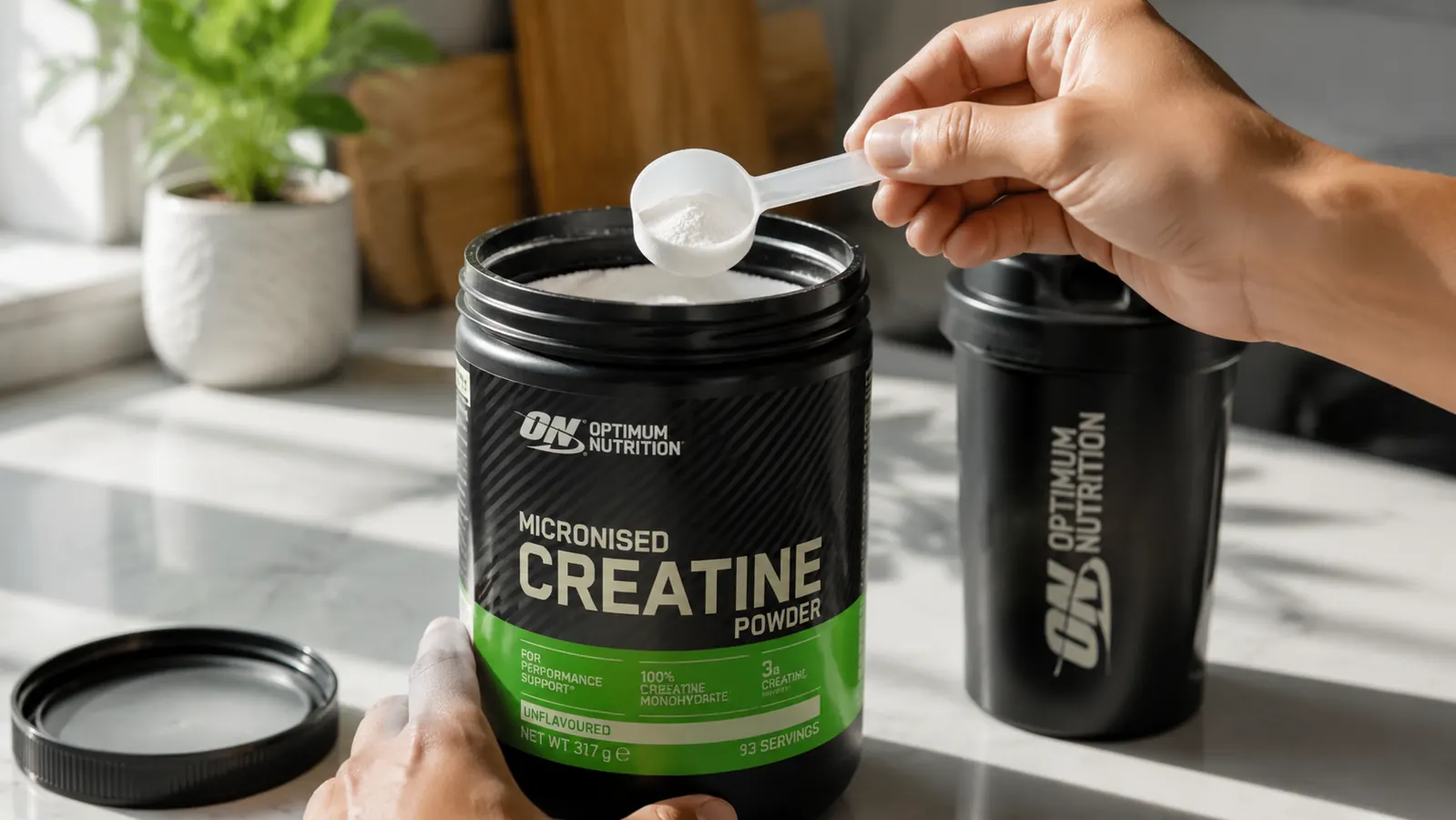
For the loading phase, I took 5 grams four times daily for the first five days, which many research protocols use to saturate muscle stores faster. After that I dropped to a single 5-gram dose each morning, stirred into a glass of cold water about 20 minutes before I trained or, on rest days, just with breakfast. I chose morning because it is easy to remember and research suggests timing matters less than simply being consistent. The ON tub has 60 servings at 5 grams each, so at the daily maintenance dose it lasts two months. I bought two tubs.
I tracked two simple things each day: a 1-to-10 perceived soreness rating in my phone notes, and my rep counts on three benchmark lifts (back squat, bent-over row, dumbbell bench press) at fixed weights I had been using for months. I also noted any water retention or stomach issues because those are the two most common complaints I hear about creatine.
What the First Four Weeks Actually Looked Like
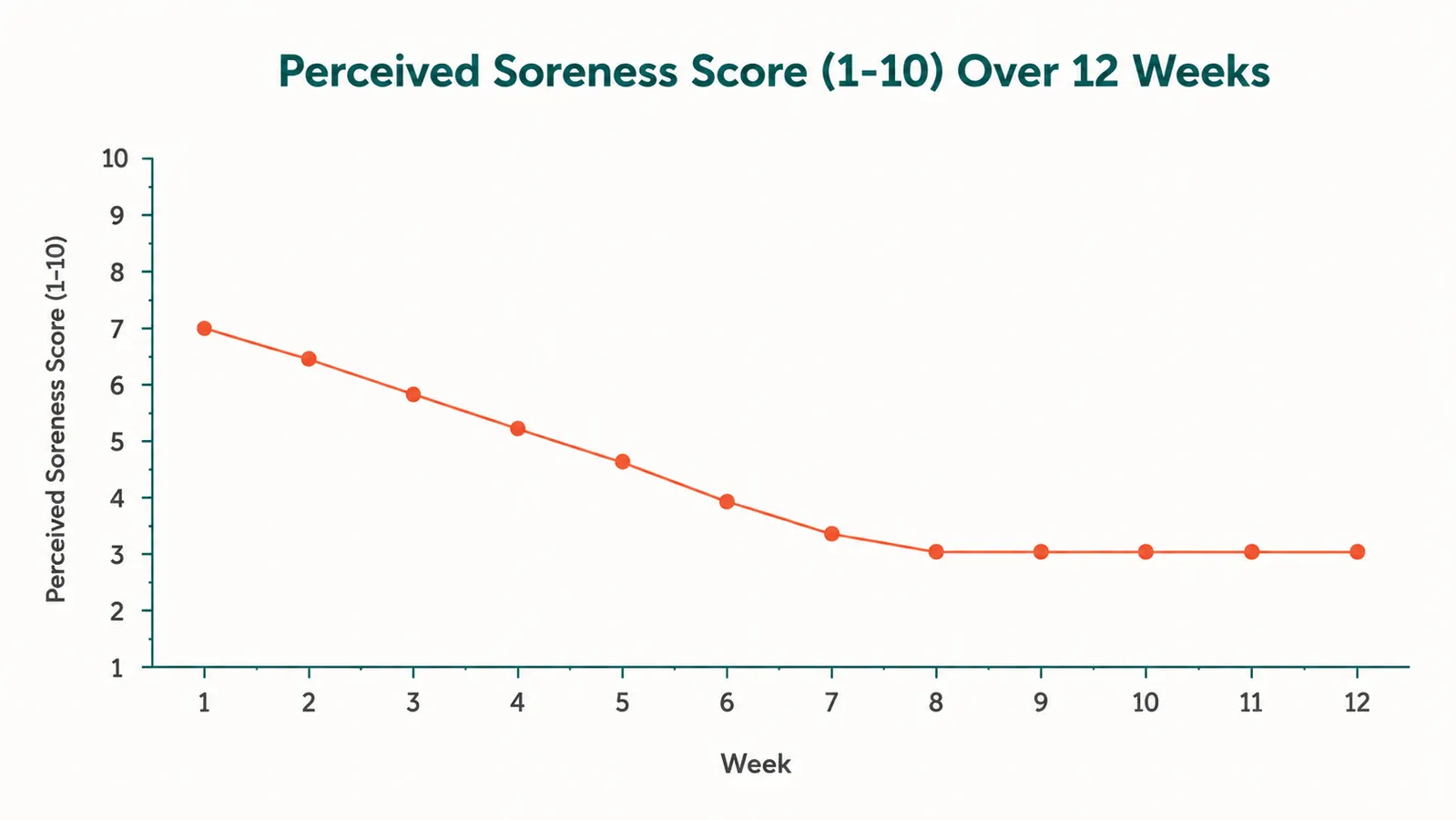
Weeks one and two: nothing dramatic. My soreness scores stayed around 6-to-7 after hard lower body sessions, same as before. I noticed I felt a little fuller, which I chalked up to the water retention that comes with creatine loading. I gained about two pounds in the first week, almost certainly water, and it leveled off. No stomach upset, no cramping, no weird taste in my water because the powder is genuinely unflavored and dissolves completely.
Weeks three and four: I noticed something subtle. I was finishing my squat sets feeling less like I needed to sit down for ten minutes afterward. My rep counts on the benchmark lifts were not higher yet, but I was recovering faster within each training session. The sets felt less grinding. I was not sure if this was creatine or just a good block of training, so I kept logging and stayed patient.
The Change I Actually Noticed: Weeks Five Through Eight
Week five was when I started believing this was working. My post-leg-day soreness score dropped from a consistent 6-to-7 to a 4. I woke up Wednesday morning, which is usually my stiffest day after Monday and Tuesday sessions, and my legs felt like they belonged to someone who was not quite so tired. That might sound underwhelming, but if you have ever trained while working a full schedule, you know that Wednesday legs matter a lot.
Wednesday is my canary. If I can walk down the stairs without wincing on Wednesday, the recovery protocol is working. By week five, the stairs were fine.
By week six, my benchmark rep counts started climbing. On back squats at 135 pounds, I went from a consistent 8-to-9 reps on my last set to hitting 11 and 12 without changing anything about my programming. Research suggests creatine works in part by increasing phosphocreatine stores, which helps muscles regenerate ATP faster during high-intensity efforts. Many lifters find this translates into more reps at a given weight, and that is what I saw. I want to be careful not to overstate this: I did not suddenly add 50 pounds to my squat. But I consistently got one to three more reps than I had been getting on the sets where I had previously been failing.
My soreness by week eight was tracking at 3-to-4 out of 10 on the day after hard sessions. Before creatine, I had never seen it go below 5 during a hard training block. Whether that improvement is entirely due to creatine or partly due to better in-session performance allowing me to recover more efficiently, I cannot say definitively. But the trend was consistent and I had not changed anything else.
The Ingredient and Quality Breakdown
Optimum Nutrition uses Creapure, a German-sourced creatine monohydrate that is widely considered the quality benchmark in the category. Third-party testing by Creapure means you are getting a product that is verified for heavy metal content and purity. The ingredient list on this tub is genuinely one ingredient: creatine monohydrate. No fillers, no anti-caking agents listed, no proprietary blends hiding a small dose inside a big label. That matters to me because I take this every single day, and I want to know exactly what I am putting in my body.
The micronized format means the creatine powder particles are finer than standard monohydrate, which helps it dissolve faster and reduces the gritty texture some people dislike. I stirred mine into about 12 ounces of cold water and it was fully dissolved within 30 seconds with a simple spoon. I have tried other creatines that clump or leave a chalky film on the glass. This does not.
Per serving at today's price, this is one of the most cost-effective supplements in the recovery category. You are not paying for flavoring, marketing, or proprietary delivery systems. You are paying for a single well-studied ingredient that has decades of research behind it. For context, research on creatine monohydrate dates back to the early 1990s and it remains one of the most studied performance supplements in existence. The International Society of Sports Nutrition considers it safe for healthy adults at the standard 3-to-5 gram daily dose.
Weeks Nine Through Twelve: Maintenance Phase Results
By week nine, I had dropped from four doses during loading to a single 5-gram morning dose, and the results plateaued in the best way: they held steady. My soreness stayed in the 3-to-4 range even as my training got progressively heavier. My rep counts on benchmark lifts remained elevated compared to my pre-creatine baseline. I did not keep gaining every week, but the floor I had found in weeks five through eight did not drop.
One thing I noticed that I did not expect: my general mood around training improved. I am not saying creatine is some kind of motivational supplement, but when your legs do not feel like punishment on a Wednesday morning, you are more likely to actually show up for the workout. The dread I had built around day three of my training week mostly disappeared. That is a quality-of-life change that is hard to put a number on but very easy to feel.
What I Liked
- Dissolves completely in cold water, no gritty texture or chalky aftertaste
- Single-ingredient formula: Creapure creatine monohydrate with nothing added
- Low cost per serving, one of the lowest costs per dose in the category
- Over 104,000 Amazon reviews with a 4.6-star average, the largest review base of any creatine product
- Noticeable improvement in between-session soreness by weeks five through six in my experience
- Rep counts at fixed weights increased without changing training volume or intensity
- Unflavored, so it works in water, juice, a protein shake, or coffee without changing the taste
Where It Falls Short
- Results in weeks one through three are subtle enough that impatient users may give up before the payoff
- Loading phase water retention (1 to 2 pounds) can be discouraging if you are not expecting it
- The plain white tub and minimalist label look generic compared to premium-branded competitors
- Not a great fit if you dislike plain powders, since there are no flavored versions of this specific product
- Requires consistent daily use: skipping several days in a row starts to deplete muscle stores

How It Compares to What I Tried Before
Before this experiment, I had tried two other creatine products: a flavored creatine blend from a popular supplement brand and a generic store-brand creatine monohydrate from a big-box retailer. The flavored blend had a long ingredient list including beta-alanine, which causes a tingling sensation I find distracting. I never knew whether any benefit I felt was from the creatine or the other ingredients. The store-brand monohydrate did not dissolve cleanly and had a chalky residue I did not love. Neither of them lasted more than three or four weeks in my rotation before I stopped buying them. The ON product has now been my daily supplement for going on five months, which is the longest I have stuck with anything in this category.
If you want a deeper look at how ON Micronized Creatine stacks up against the BulkSupplements option on purity, cost per serving, and third-party testing, check out my full comparison. And if you are still figuring out whether creatine monohydrate is right for your recovery stack, the research breakdown in my creatine recovery benefits article is worth a read before you commit to anything.
Who This Is For
This product is a great fit for anyone who trains at least three days a week, feels like their recovery is the limiting factor more than their effort in the gym, and wants a single-ingredient supplement with a long safety record and a low price point. It is especially well-suited to people in the 35-to-60 age range who are noticing that recovery takes longer than it used to, busy parents and shift workers who cannot afford to feel wrecked on non-training days, and anyone who has been burned by complex supplement stacks and just wants something simple and evidence-backed. You do not need to be chasing a personal record or training for a competition. You just need to be consistent.
Who Should Skip It
Skip this if you have kidney disease, reduced kidney function, or any health condition your doctor has flagged as a concern around creatine use. Because creatine affects how your kidneys filter waste products, it is not appropriate for everyone. Also skip it if you are expecting a dramatic transformation in two weeks: creatine monohydrate works on a timescale of four to eight weeks for most people, and anyone who is not prepared to wait that long will be disappointed. Finally, if you are sensitive to water retention and tracking your scale weight daily, the two-to-three pound increase in the first week of loading will stress you out. It is not fat, but it is real water weight and it can linger.
Twelve weeks in, this is still the only supplement on my counter. Here is why.
Optimum Nutrition Micronized Creatine Monohydrate is unflavored, clean, and costs less than a dollar per week to maintain. With over 104,000 customer ratings on Amazon and a consistent 4.6-star average, it is the benchmark for a reason. Check today's price and see if it fits your recovery stack.
Amazon Check Today's Price on Amazon →