
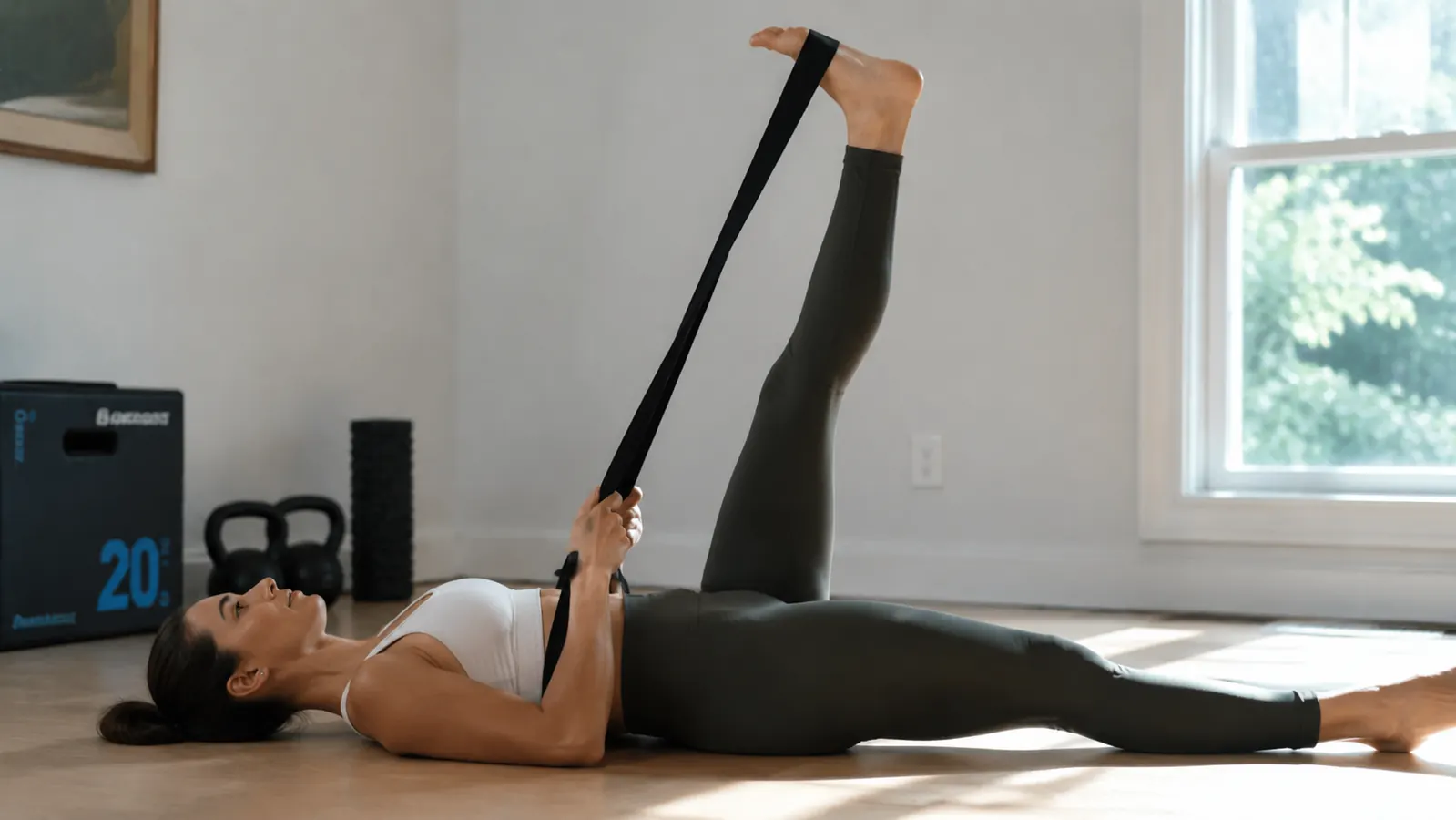
If you finish a workout by touching your toes twice and calling it a cool-down, your muscles are getting shorter every session while you wonder why your hips ache and your hamstrings never loosen up. A stretch strap lets you hold positions your hands simply cannot reach on their own, and the OPTP Stretch Out Strap is the one physical therapists hand to patients and coaches keep in their gym bag for exactly that reason.
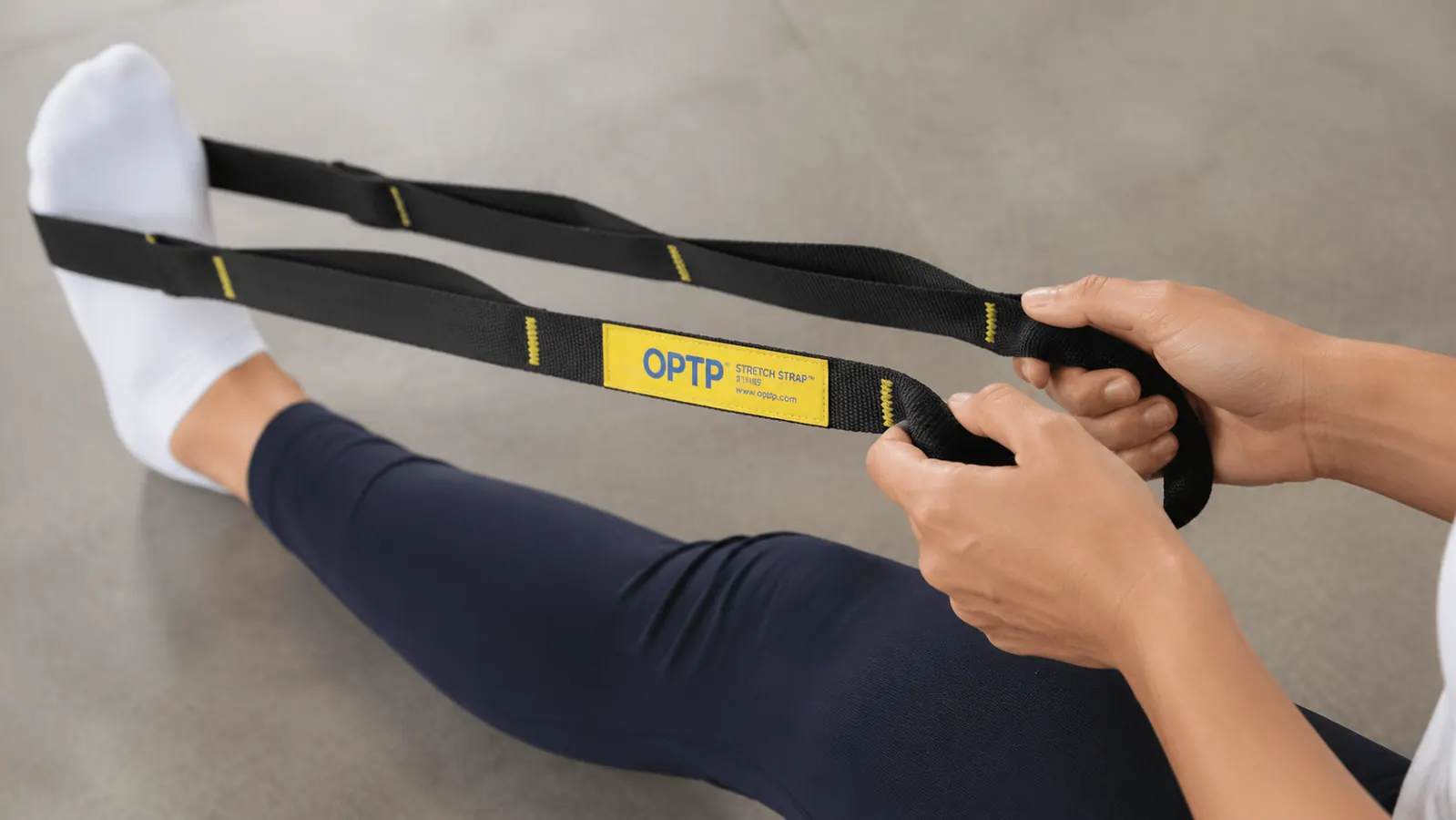
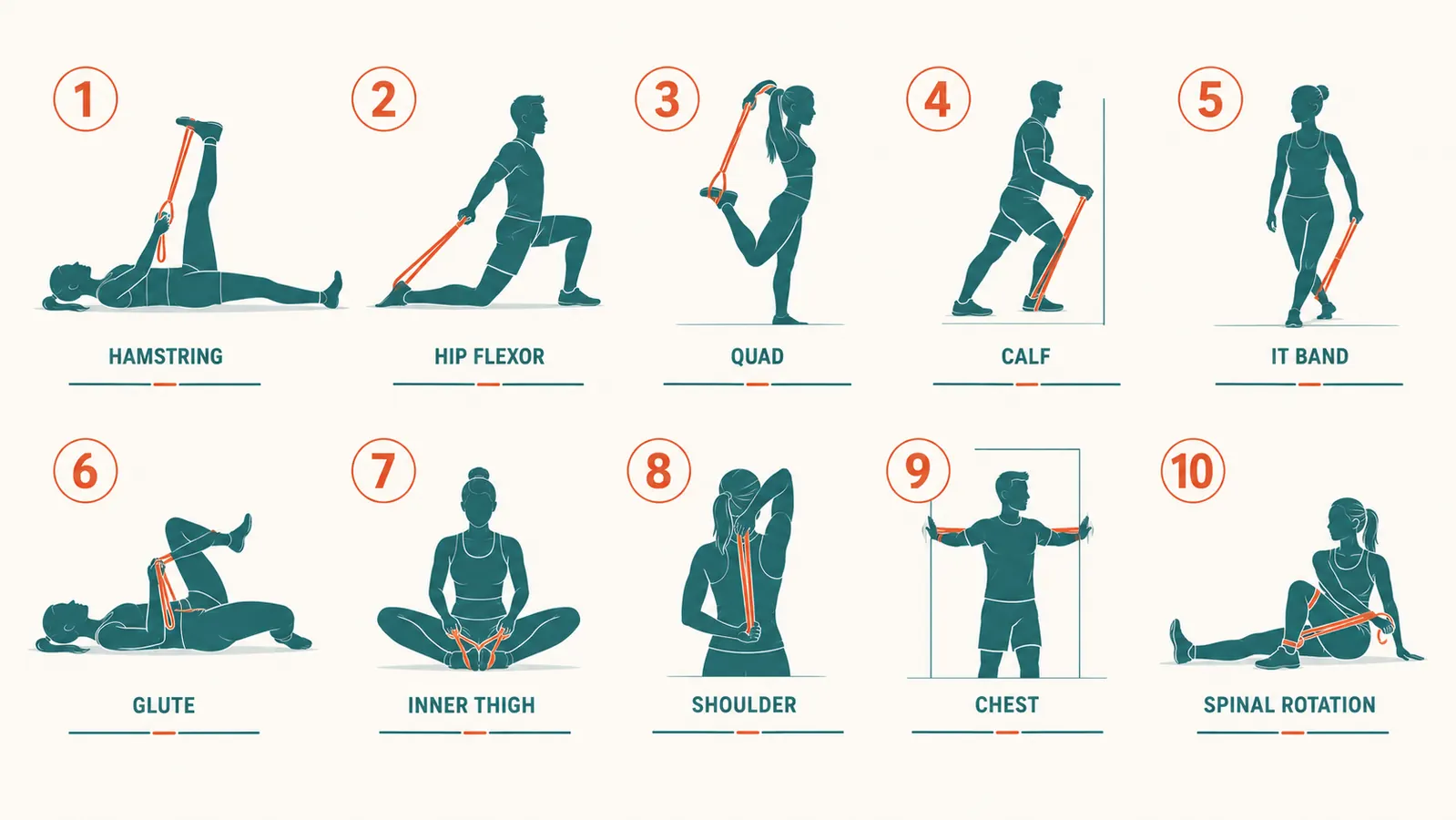
The strap has ten loops spaced a few inches apart so you can walk your hands up or down mid-stretch, increasing tension gradually without yanking. That control is what makes it different from just grabbing your foot with your hand. Below are ten stretches I cycle through after every training session. Do each one for 30 to 60 seconds. The whole routine runs about ten minutes.
Your cool-down is one tool away from actually working.
The OPTP Stretch Out Strap comes with an illustrated exercise booklet and has more than 27,000 reviews. It costs less than a single massage session.
Amazon Check Today's Price on Amazon →Supine Hamstring Stretch
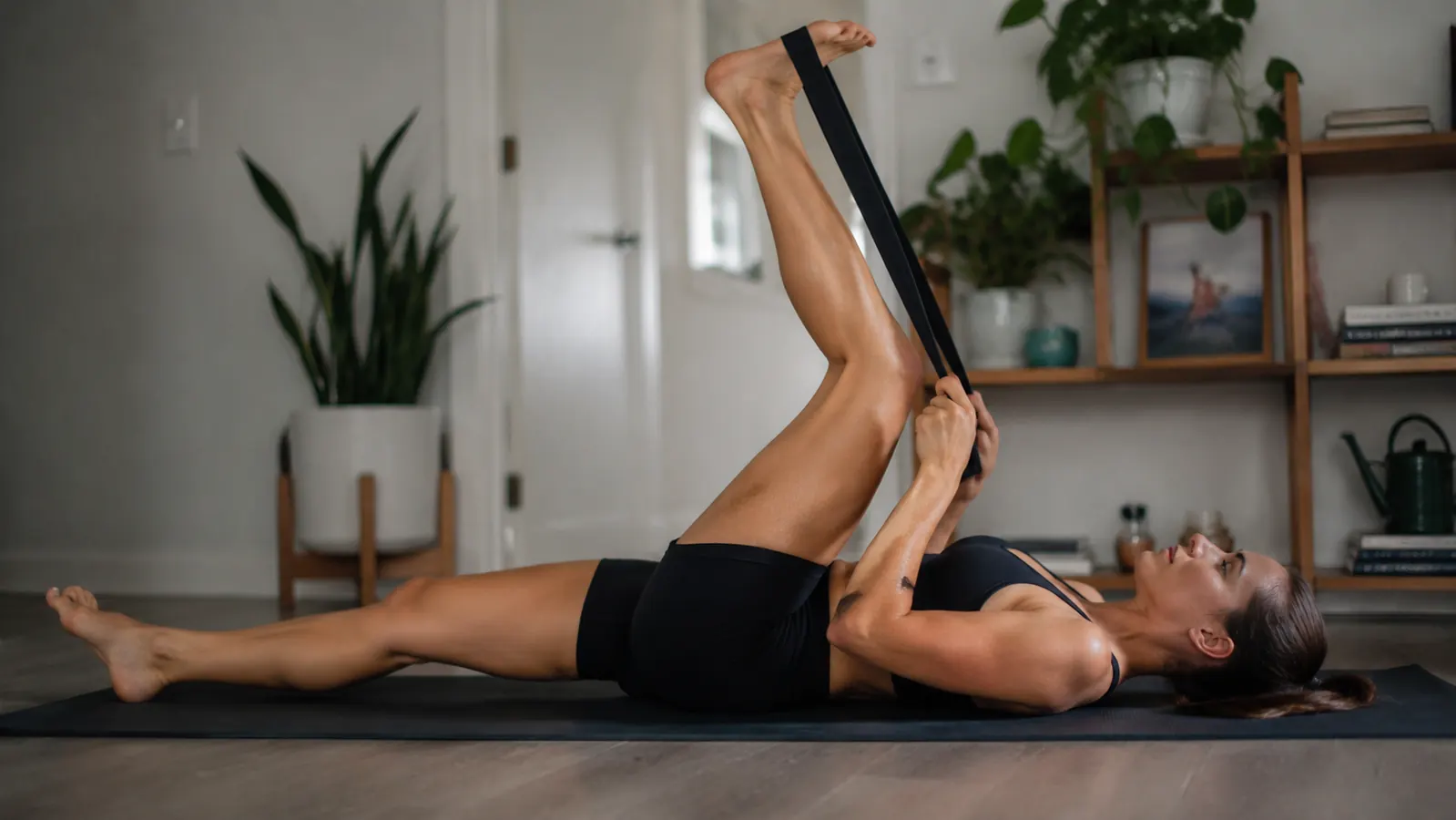
Lie on your back, loop the strap around the arch of one foot, and extend that leg toward the ceiling. Keep the opposite leg flat or bent. Walk your hands up the loops until you feel a firm pull in the back of the thigh, not pain. Hold for 45 seconds. This is the stretch most people think they can do without a strap until they try it with one and realize how much further they can safely get. It targets the full length of the hamstring from the sit bone down to the knee. If your hamstrings are chronically tight after leg day or long runs, start here every single time. If you want more on how this strap holds up over months of daily use, the long-term OPTP review covers that.
Standing Calf and Achilles Stretch
Sit on the floor with one leg straight in front of you. Loop the strap around the ball of your foot and gently pull the toes back toward your shin. You will feel this in two different places depending on how you angle the pull: more in the belly of the calf with a straight knee, more in the Achilles and lower calf if you soften the knee slightly. Hold each variation for 30 seconds. Runners and anyone who wears shoes with a heel drop all day tend to have chronically shortened calf tissue, and a tight calf is a common sneaky cause of knee discomfort on the stairs.
Inner Thigh and Groin Opener
From lying on your back, loop the strap around one foot and extend that leg toward the ceiling. Then slowly lower the leg out to the side, keeping the opposite hip pressed flat to the floor. The strap lets you control exactly how far the leg goes rather than having gravity decide for you. Stop where you feel a gentle stretch through the inner thigh, not a yank in the groin. This one is especially useful after squats, lunges, or any lateral movement. Hold 45 seconds each side.
IT Band and Outer Hip Release
Lie on your back, loop the strap around one foot, raise the leg to 90 degrees, then cross it slowly over the body toward the opposite shoulder. Keep both shoulders flat. You will feel this along the outer thigh and sometimes into the glute. It is a gentler way to get into the same territory as a pigeon pose, which some people find too intense right after a workout. If you have tight hips and a nagging knee, this one belongs in your post-run routine. The honest OPTP review goes into more detail on where this strap earns its keep.
Kneeling Hip Flexor and Quad Stretch
Kneel on one knee with the other foot forward. Loop the strap around the ankle of your back leg, reach back, and gently draw the heel toward your glute. This combines a quad stretch with a hip flexor opener in one position. People who sit for work tend to have extremely tight hip flexors that pull the pelvis forward and load the lower back. Doing this stretch after every workout, even just 30 seconds per side, is one of the most useful things you can do for your lower back over the long term.
Amazon Still tight through the quads and hip flexors? This is the stretch that changes it. →
Supine Glute and Piriformis Stretch
Lie on your back, cross one ankle over the opposite knee in a figure-four shape, then loop the strap around the foot of the lower leg and gently draw both legs toward your chest. This is a supported version of a seated piriformis stretch. For anyone who deals with sciatica flares or deep glute tightness after heavy lifting days, this is the one to hold longest. Aim for 60 seconds. The piriformis is a small muscle that sits deep under the glute, and it rarely gets enough attention in a standard cool-down.
The strap does not force you into a range you cannot handle. It gives you control over how far you go, which is exactly what tired muscles need after a hard session.
Standing Shoulder and Chest Opener
Hold the strap behind your back in both hands, palms facing outward, with your hands about two feet apart. Gently straighten your arms and lift them away from your back. As your chest opens, you can slowly walk your hands closer together on the strap to increase the stretch. This one is easy to skip because it does not feel like an obvious post-workout stretch, but shoulders round forward during pressing movements and the chest shortens. Thirty seconds of this at the end of a lifting session goes a long way toward keeping your posture where you want it.
Side-Lying Quad Stretch
Lie on your side, loop the strap around the ankle of your top leg, and gently draw the heel toward your glute while keeping your hips stacked. This is a safer option than pulling your foot up while balancing on one leg, which makes most people compensate by arching their lower back. The strap lets you focus the stretch exactly in the quad without twisting or tipping. If you ran, cycled, or did step-ups today, your quads probably need more than thirty seconds. Go for 45 to 60 per side.
Spinal Rotation and Hip Stretch Combined
Lie on your back, bend one knee and place that foot flat on the floor. Loop the strap around the knee and let the leg fall across your body, then reach the opposite arm out to the side and let your gaze follow. This is a rotation that opens the hip and gently mobilizes the thoracic spine at the same time. It feels particularly good after any workout that loaded the spine, including deadlifts, carries, or overhead pressing. Hold it for 30 to 45 seconds and breathe into the rotation rather than forcing it.
Overhead Tricep and Lat Stretch
Hold one end of the strap with your right hand and raise that arm overhead. Bend at the elbow so the strap falls behind your back. Reach your left hand behind your back and grab a lower loop. Gently pull down with the left hand to deepen the stretch in the right tricep and lat. This targets a stretch that is genuinely hard to get into without assistance. After pull-ups, rows, or any overhead pressing, the lats and triceps tend to hold a lot of residual tightness. Switching sides takes ten seconds. If you want a full guide to building flexibility with this tool over 30 to 90 days, the step-by-step flexibility guide walks through exactly that.
What I Would Skip
If you are pressed for time, the shoulder opener and the spinal rotation are the two I drop first. Both are genuinely useful but neither is as immediately impactful as the hamstring, hip flexor, and glute work for most people. The five stretches that consistently make the biggest difference in how I feel the next morning are numbers 1, 4, 5, 6, and 8. Start there if ten minutes feels like too much on a tired day.
Ten minutes, a piece of nylon, and you will feel the difference by tomorrow morning.
The OPTP Stretch Out Strap is rated 4.7 stars across more than 27,000 reviews and comes with a printed exercise booklet. It is the tool physical therapists and coaches actually use, at a price that makes it a no-brainer to keep in your bag.
Amazon Check Today's Price on Amazon →