
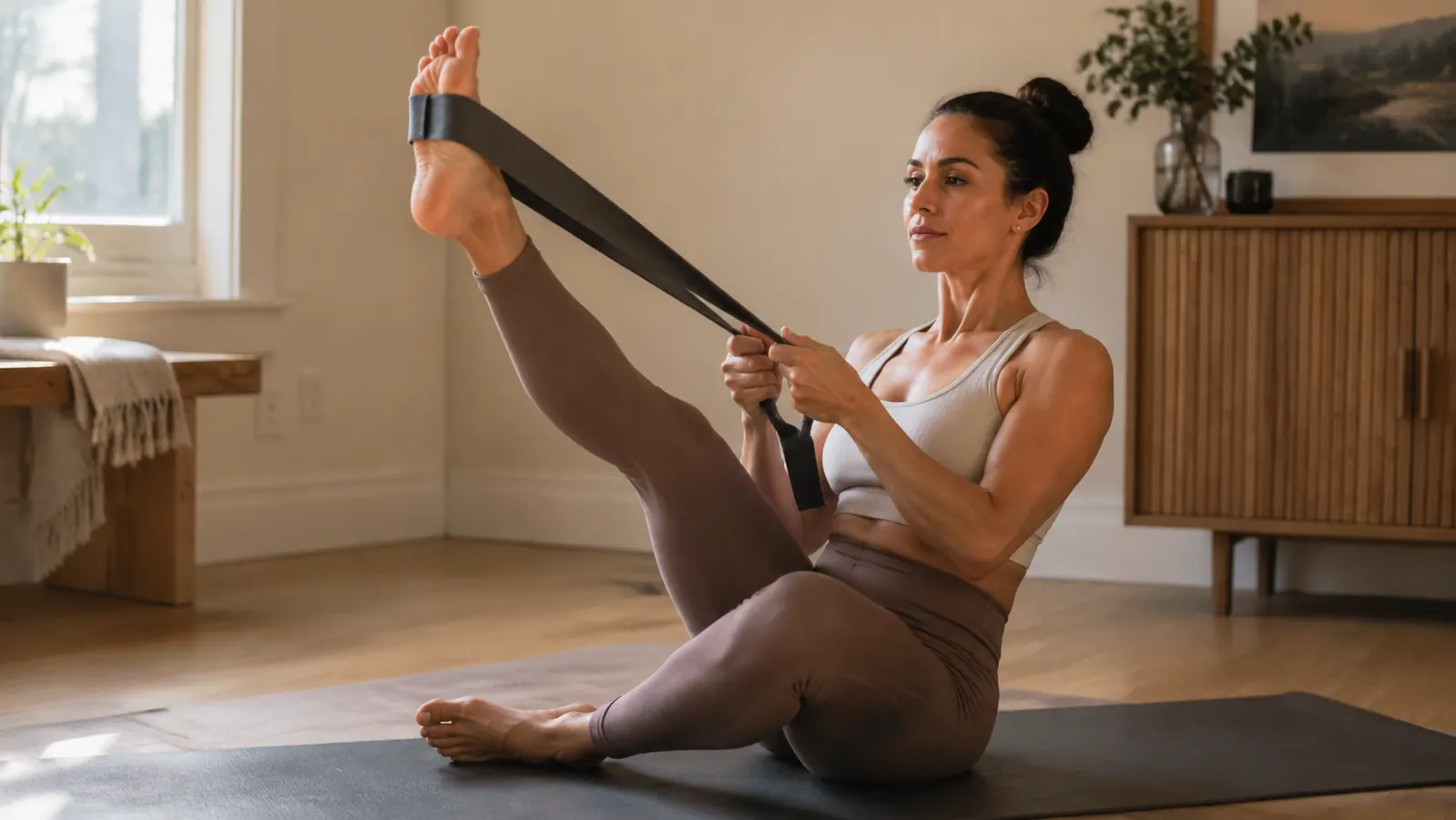
If you already own a resistance band, you have probably wondered the same thing I did: do I actually need a stretch strap, or is the band sitting in my gym bag already good enough? I asked that question for months before I finally ordered the OPTP Stretch Out Strap. What I found was that these two tools are solving very different problems, and once you understand that, the choice becomes obvious.
I spent six months using both: a standard flat loop resistance band and the OPTP strap, working on the same problem areas, the same tight hamstrings and locked-up hips I carry after long days on my feet. I used each tool for the same stretches, the same time of day, and tracked how my range of motion and recovery felt over time. This is what I learned about when each tool helps and when one clearly wins.
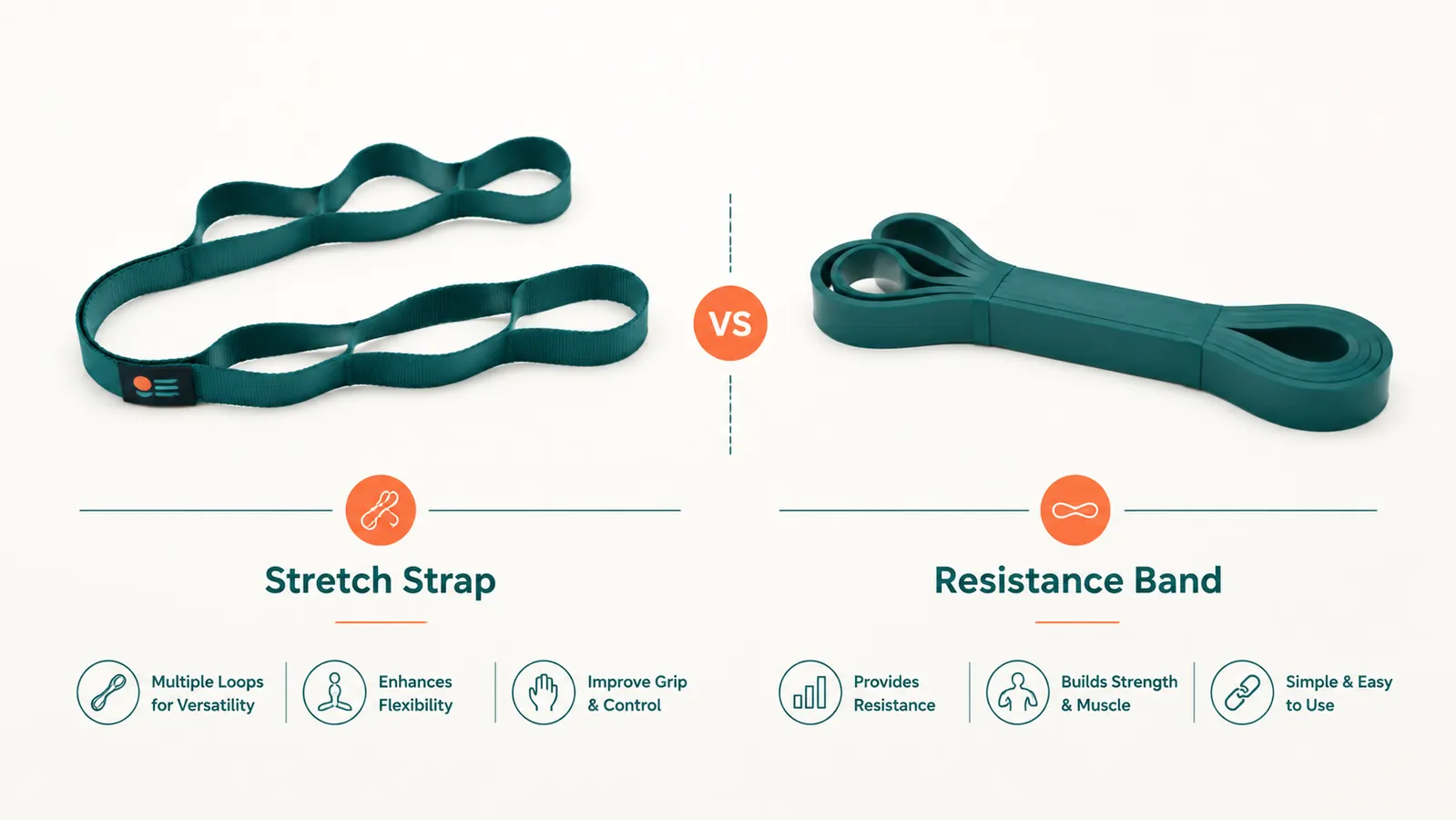
| Stretch Out Strap | Resistance Band for Stretching | |
|---|---|---|
| Primary Design Purpose | Passive assisted stretching and flexibility | Resistance training and dynamic warm-up |
| Number of Grip Positions | 10 individual loops spaced along full length | 1 loop (single continuous band) |
| Ability to Progress a Stretch | Move one loop closer for incremental deepening | Requires re-gripping by feel, inconsistent |
| Recoil / Snap-Back Risk | None, non-elastic woven nylon | Yes, elastic material can snap or release suddenly |
| Use for Strength Exercises | Not designed for it, no resistance | Yes, suited for banded squats, rows, pull-aparts |
| Comes With Instruction Guide | Yes, illustrated exercise booklet included | No, most bands include no guidance |
| Approx. Price | Budget-friendly (see current price on Amazon) | Varies widely depending on set size and quality |
| Best For | Hamstrings, hips, calves, shoulders, post-run or post-shift recovery | Warm-up activation, strength accessory work, rehab banding |
| Durability After Daily Use | Woven nylon holds shape with no stretch degradation | Latex bands can degrade, crack, or lose resistance over time |
Where the OPTP Stretch Out Strap Wins
The biggest thing I noticed when I switched from my resistance band to the OPTP strap for stretching was how much more controlled everything felt. When you loop a resistance band around your foot and try to hold a hamstring stretch, you are fighting the band's elasticity the entire time. Your muscles have to work to hold the position steady instead of relaxing into it. That defeats the whole point of a passive stretch.
The OPTP strap is made from non-elastic woven nylon. It does not recoil. When you loop it around your foot and pull until you feel the stretch, the strap just sits there holding that position for you. Your hip flexors stop gripping. Your hamstring softens. That is where the flexibility gains actually come from. You can hold a 30-second stretch the way you are supposed to, instead of spending half that time fighting the band's pull-back.
The multiple loops also matter more than I expected. The OPTP strap has 10 individual loops spaced along its length. When I am doing a supine hamstring stretch and I want to go a little deeper, I just move my grip one loop closer. That tiny incremental adjustment is genuinely useful because tight muscles do not respond well to being yanked into a deeper position all at once. The strap lets you ease forward in small steps, which is both safer and more effective. A resistance band gives you none of that control. You are gripping smooth elastic and guessing at your depth.
For anyone doing post-shift recovery, whether that is nursing, standing retail, teaching, or long training blocks, the strap is meaningfully better. You get to the floor, loop it around one foot, and in ten minutes you have worked through hamstrings, calves, hip flexors, and quads without your arms getting tired holding a band taut. It is one of those tools where the design matches the actual use case.
There is also the durability factor. I have gone through two resistance bands in the past two years. The latex wears down, the band starts to feel slippery, and eventually it nicks or snaps. The OPTP strap is woven nylon. It looks essentially the same as it did when I opened the package. For a tool I use daily, that matters. You are not replacing it every season.
Your resistance band is not built for this kind of stretching.
The OPTP Stretch Out Strap is budget-friendly and comes with an illustrated exercise booklet. It is the stretching tool recommended by physical therapists and coaches for a reason: the design actually fits the job.
Amazon Check Today's Price on Amazon →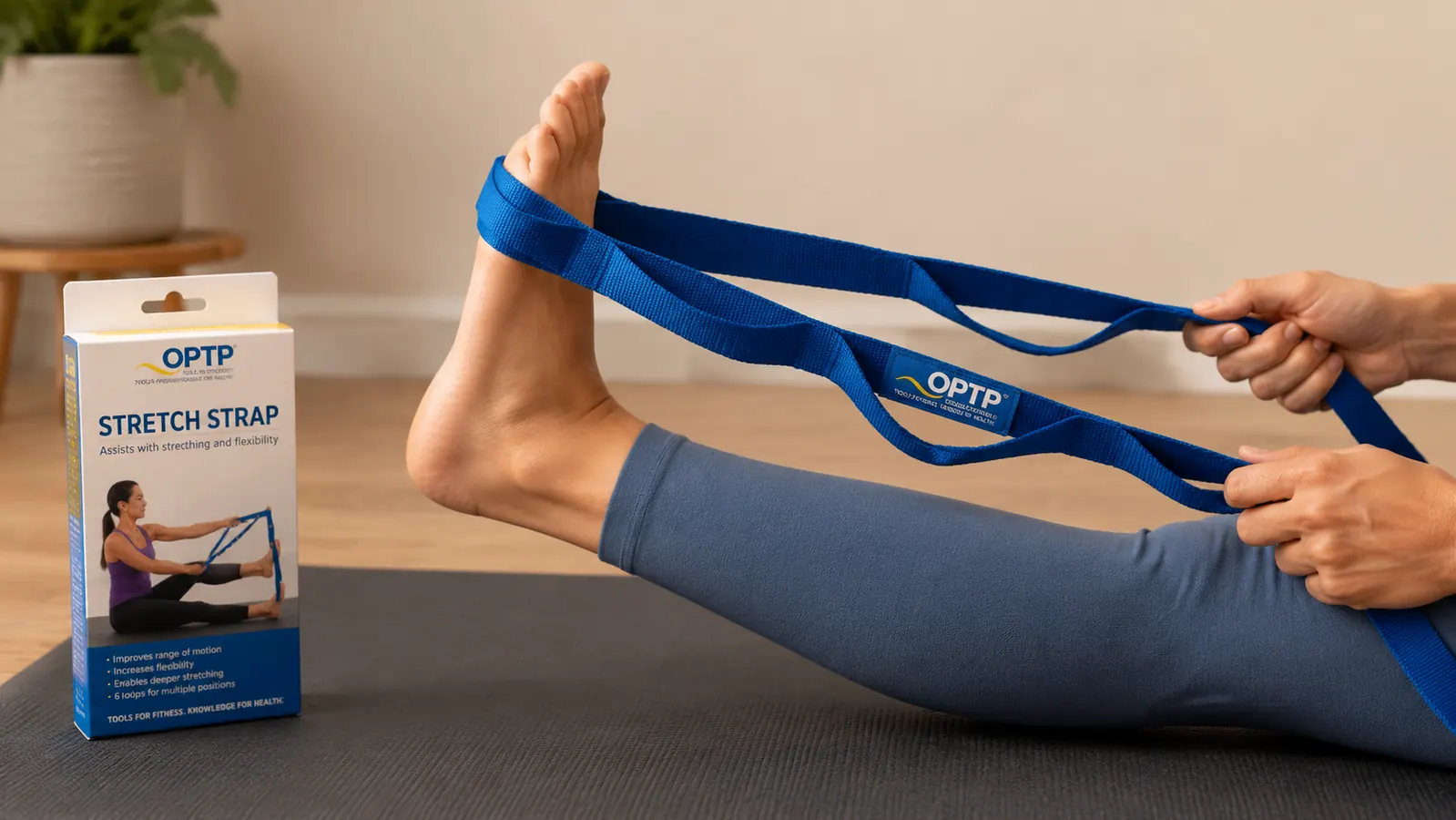
Where a Resistance Band Still Wins
I want to be straightforward here because this is a real comparison, not a sales pitch for one tool. If you need to do banded glute bridges, lateral band walks, shoulder pull-aparts, or any warm-up activation work, the OPTP strap is useless. It has no resistance. You cannot do a banded squat with a piece of flat nylon rope. A resistance band is the right tool for all of that, full stop.
Resistance bands also win on versatility if you are working out in a hotel room or a small apartment and you genuinely need one tool that does multiple jobs. You can rig a band for a seated row, use it for tricep pushdowns, and wrap it around your legs for side-steps in the same workout. The OPTP strap does one thing: help you stretch better. If you are genuinely limited to carrying one item, a resistance band covers more ground. The difference is that it does not cover that ground as well when the job is passive flexibility work.
A resistance band is fighting you the whole time you are trying to relax. The OPTP strap just holds the position and lets your muscle do what it needs to do.
The Practical Question: Do You Actually Need Both?
Probably yes, but the OPTP strap is budget-priced, so this is not a hard choice to make. Most people who come to me asking about stretching already have a resistance band. They bought it for workouts and then started improvising it for cooldowns because it was already in the bag. I get it. But if your hamstrings are still tight after months of banding your way through stretches, the tool is partly the problem.
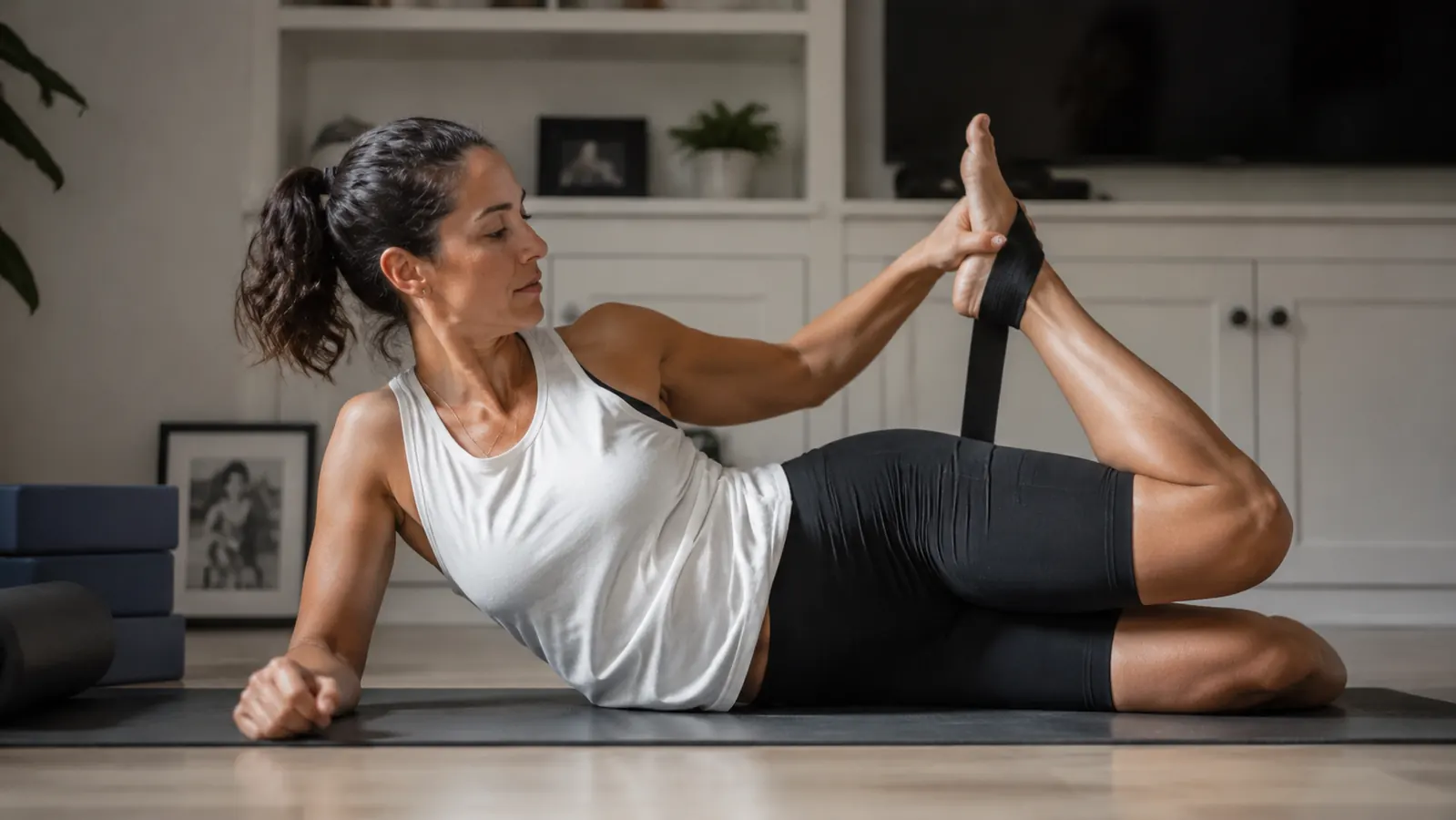
The strap sits flat and takes up no space. I keep mine on my nightstand because my best stretching routine is about ten minutes before bed. I do four positions: supine hamstring, figure-four hip, lying quad, and a calf stretch. The strap makes all four easier to hold correctly. My resistance band stays in my gym bag for workouts. They do not compete with each other; they do different jobs.
If you are starting from zero and money is tight, get the OPTP strap first. You can always do a basic resistance band warm-up with a looped towel or a light tube band from a dollar store. But you cannot replicate what the OPTP strap does with a standard resistance band, because the elastic recoil works against the entire point of a passive stretch. That is the core difference and the reason I stopped using my band for cooldowns entirely.
One thing I tell every client who asks about this: the tool you will actually use is the one that makes the routine feel doable. Ten minutes with the OPTP strap on the floor before you brush your teeth is a sustainable habit. Fifteen minutes fighting your resistance band while it snaps back at your foot is not. Ease matters when you are trying to build consistency.
Who Should Buy the OPTP Stretch Out Strap
This strap was designed for and is used regularly by physical therapists, pilates instructors, yoga teachers, and athletic trainers. But the people I recommend it to most often are not elite athletes. They are the parents who stand in a kitchen for two hours every evening and wonder why their calves are always tight. The nurses who finish a 12-hour shift and cannot fully extend their hips. The weekend runners who do a long run on Saturday and spend Sunday limping. The OPTP strap is built for people who need real recovery on a real schedule, not for people with an hour to spare for mobility work every day.
If your goal is to stretch more consistently, hold positions long enough to actually matter, and do it without a partner, the OPTP strap is designed for exactly that. It also includes a booklet of illustrated stretches so you do not have to guess what to do with it. That booklet alone is worth the price for people who have never worked with a flexibility tool before. If you want more detail on the specific stretches and how to build a routine, the guide at 10 post-workout stretches with a stretch strap walks through ten positions you can use right away.
Who Should Skip the OPTP Strap (or Buy It Second)
If stretching is not a priority for you and you mainly want one tool for resistance training warm-ups and accessory strength work, just stick with your band. The OPTP strap does not add value to that workflow. Same story if you are already working with a physical therapist who provides specific equipment: ask them before adding anything. And if you are an advanced yogi or someone who can comfortably hold deep positions unassisted, you may find the strap unnecessary because your flexibility baseline is already high enough that you do not need the mechanical assist.
The strap is also not a magic fix for injury. If you have a specific muscle or joint issue, a PT appointment is worth more than any tool. What the OPTP strap does is make consistent, correct stretching easier for everyone else. That is a narrow use case, but it is exactly the use case most adults over 30 actually have.
The Bottom Line
If you are comparing these two tools for stretching specifically, the OPTP Stretch Out Strap wins. It holds positions without fighting your muscles, lets you progress incrementally through multiple loops, and is made from a material that does not degrade or snap back. For passive flexibility work after a workout or a long day, it is the better tool by a clear margin.
If you want to go deeper on what the strap can actually do for flexibility over time, the long-term review at OPTP Stretch Out Strap: 6 months of daily use covers what changed over six months of consistent work, including which positions made the biggest difference for tight hips and hamstrings. And if you want to understand how to build a flexibility routine around it step by step, the guide at how to improve flexibility with a stretching strap lays out a 30, 60, and 90-day progression.
Your resistance band is a good tool. It is just not the right tool for this job. The OPTP strap is, and at a low price point, trying it costs less than a single yoga class.
Ready to stop improvising your stretching routine with the wrong tool?
The OPTP Stretch Out Strap is budget-friendly, comes with an illustrated booklet, and is the go-to flexibility tool for physical therapists and coaches who work with everyday people, not just elite athletes.
Amazon Check Today's Price on Amazon →