
I want to start this review with the stuff creatine marketing never mentions. Not because I am trying to talk you out of buying Optimum Nutrition Micronized Creatine, which is ASIN B002DYIZEE and the product I am actually reviewing here, but because the gap between what the packaging implies and what really happens in the first two weeks is wide enough that a lot of people quit before the supplement has a chance to do anything. If you have bought creatine before and stopped using it after ten days because you did not feel like a different person, this article is for you. And if you are shopping for the first time, the honest version of this story will save you from the same frustration.
Quick disclaimer before anything else: I am a recovery coach and former group fitness instructor, not a doctor or registered dietitian. Nothing in this article is medical advice. Creatine monohydrate has a long safety record in healthy adults, but it affects how your kidneys filter waste, and some people should not take it. Always check with your doctor first, especially if you have kidney concerns, take any medications, or have a health condition that your provider monitors. This is a practical review from someone who uses this product and coaches clients who use it. That is all.
The Quick Verdict
Optimum Nutrition Micronized Creatine is one of the cleanest, lowest-cost ways to take creatine monohydrate consistently. The brand name matters more than most people think, but less than ON's marketing implies. The honest case for paying a little more than generic is particle size and third-party testing, not magic. Expect water weight in week one, modest mixing cloudiness if you use cold water, and zero dramatic results before week four. If you can sit with that, the payoff is real.
Amazon Check Today's Price →Tired of supplements that promise everything and deliver nothing you can feel? This one takes patience, but it is backed by more research than almost anything else on the shelf.
Optimum Nutrition Micronized Creatine Monohydrate has over 104,000 Amazon ratings at a consistent 4.6-star average. Unflavored, single-ingredient, and priced low enough that you can stay consistent for months without it feeling like a splurge. Check today's price before you decide.
Amazon Check Today's Price on Amazon →What the Packaging Does Not Tell You
Let me walk through the things I wish someone had told me clearly before I started recommending creatine to clients. These are not dealbreakers. They are just realities that the supplement industry glosses over because they slow down impulse buys.
The first one is water weight, and it is not optional. Creatine draws water into your muscle cells. That is part of how it works. In the first week, most people gain one to three pounds on the scale. I have had clients text me in a panic thinking they were getting fat. You are not. That is intracellular water, and it actually contributes to the fuller muscle look that experienced lifters notice. But if you are weighing yourself daily and you are not expecting this, it will confuse or alarm you. I tell every client upfront: put the scale away for the first two weeks.
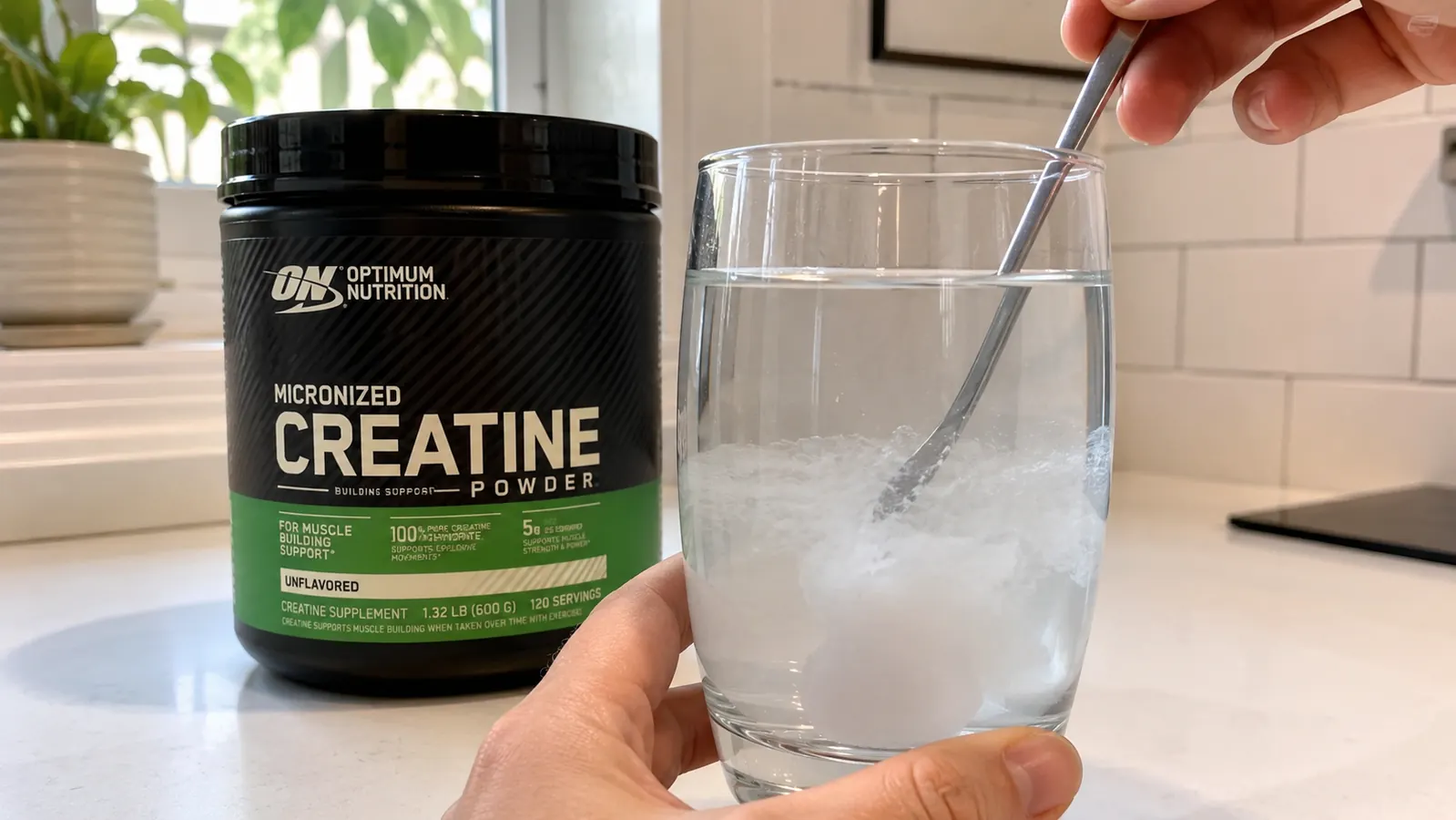
The second thing nobody talks about clearly is mixing behavior. Micronized creatine dissolves better than standard creatine monohydrate, and ON's version does dissolve cleanly in warm or room-temperature water. In cold water, though, it takes more stirring and you will still see a slight cloudiness for the first 30 to 60 seconds. It is not gritty in the way cheap creatine can be, but it is also not the instant clear dissolve that flavored pre-workouts give you. This is a fine white powder going into water. It needs a stir, maybe two. That is just the reality of the molecule.
Third, and this one surprises a lot of people: you almost certainly do not need a loading phase. The loading protocol, where you take 20 grams per day for five to seven days to saturate your muscles faster, has been around for decades. It works for speed of saturation. But research is pretty clear that if you just take 3 to 5 grams per day from the start, you get to the same place in three to four weeks instead of one week. For most people who are not prepping for a competition with a specific start date, skipping the loading phase means less water retention, less stomach discomfort, and the exact same endpoint. The loading phase became standard advice because it made early results feel faster and more dramatic. But it is not necessary for the long-term benefit.
When Creatine Does Absolutely Nothing
This section is the one I feel most strongly about including, because it is completely absent from most creatine reviews. Creatine is not a universal performance drug. There are specific situations and populations where the research shows limited or no benefit, and if you fall into one of them, you should know before you spend money.
If you eat a lot of red meat, you likely already have higher baseline creatine stores than someone who eats little or no meat. Some research suggests that people with already-high baseline stores see smaller responses to supplementation. This does not mean creatine will not work for you at all, but your ceiling for improvement may be lower. Vegetarians and vegans, on the other hand, tend to have lower baseline stores and often see the most noticeable results from supplementation.
Creatine also has limited utility for long-duration, lower-intensity endurance work. If you are primarily a marathoner or a long-distance cyclist and your sessions rarely push into high-intensity repeated efforts, creatine is not going to move the needle the way it does for someone doing intervals, lifting sessions with multiple sets per exercise, or team sports with repeated sprints. The mechanism creatine works through is most active during short, intense bursts. Long slow distance work barely touches that system.
And finally, creatine does nothing in the first three weeks that you will actually feel. This is not a caffeine situation where you notice it on day one. The saturation process is gradual. Most people report nothing notable until weeks three or four, and the changes, when they do come, are subtle at first. You will not feel creatine the way you feel a strong cup of coffee. You will just notice over time that the sets feel slightly less impossible, that you are recovering between sessions with a bit more ease, that you are not dreading your hardest workout day the way you used to.
So Why Does the Brand Name Actually Matter?
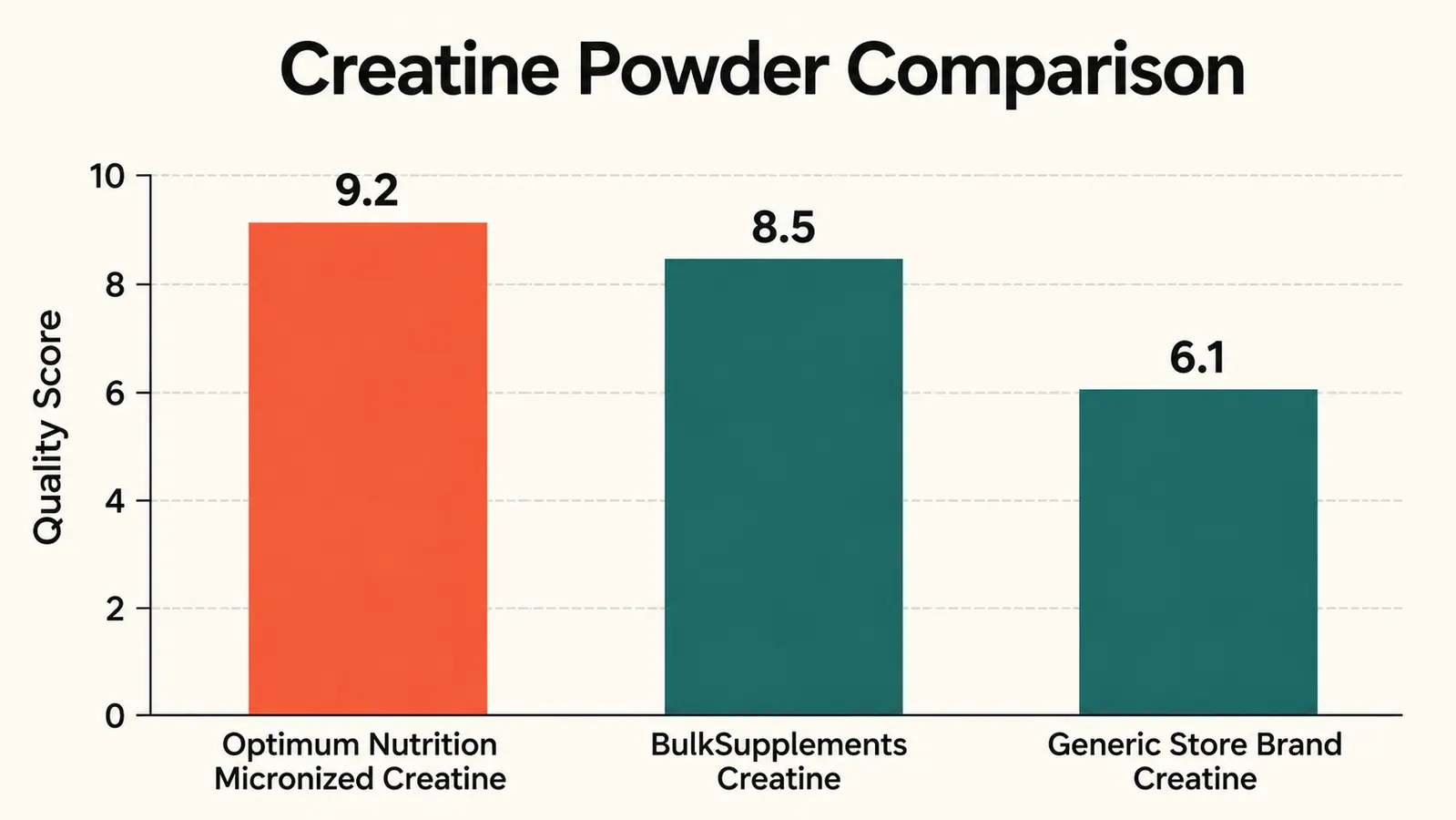
Creatine monohydrate is a commodity molecule. Chemically, the creatine in a budget store-brand tub and the creatine in ON's tub are identical. So what are you actually paying for when you choose Optimum Nutrition over the generic?
Two things, and both of them are meaningful. First, particle size. ON's micronized creatine has been processed so the particles are significantly finer than standard monohydrate. Finer particles mean faster dissolving, reduced grittiness, and somewhat better absorption because the surface area exposed to your digestive system is larger. The difference between micronized and non-micronized is noticeable when you actually use them side by side. The store-brand monohydrate I used before switching left a visible layer of undissolved powder at the bottom of my glass even after vigorous stirring. This one does not.
Second, third-party testing. ON sources from Creapure, a German manufacturer that tests for heavy metals, contaminants, and purity at levels that unbranded bulk powder suppliers typically do not match. This matters more than it sounds. The supplement industry in the US has limited FDA oversight compared to pharmaceutical products. Third-party testing is the only meaningful quality signal a consumer can actually verify. The Creapure logo on ON's tub tells you someone with a lab verified what is in the container. That is not guaranteed with generic options.
Is the Creapure sourcing worth paying a premium over BulkSupplements or another well-reviewed generic? Honestly, it depends on your risk tolerance. If you are a healthy adult who trains three days a week and is not competing in a tested sport, the generic is probably fine. If you are someone who takes what you put in your body seriously, trains consistently, and wants a paper trail of quality control, ON's sourcing provides that. For what this product costs per serving, the premium over generic is small enough that I usually just recommend ON and move on.
The supplement industry is full of products that charge premium prices for premium marketing. Creatine monohydrate is one of the rare cases where the premium actually comes from a legitimate quality difference, not just a fancier tub.
Practical Use: What Actually Works Day to Day
I take this with my morning coffee, not because the timing is scientifically optimal, but because that is when I am most likely to actually do it. The research on creatine timing is pretty clear that consistency matters far more than whether you take it before or after training, or with food or without. The most effective creatine protocol for real people living real lives is the one they will actually stick to every single morning. Skip the overthinking.
The scoop that comes with the tub is 5 grams, which is the standard maintenance dose. I put it in about 10 ounces of water, stir for about 15 seconds, and drink it. No fuss. The taste is neutral, which is genuine and not marketing copy. I have stirred this into coffee without noticing any difference in flavor. I have put it in a protein shake. I have put it in orange juice. None of those tasted weird.
One practical note that is not on the packaging: drink more water overall while taking creatine. Because creatine pulls water into muscle cells, your body wants more total hydration than usual. This is not dangerous if you are drinking normally, but if you are someone who already under-hydrates, you may notice mild headaches or sluggishness in the first week. The fix is straightforward: drink an extra glass or two of water per day.
On days when I travel or my routine gets disrupted, I use a small resealable bag with a single-dose pre-measured scoop. The tub itself is not travel-friendly. That is a minor inconvenience, not a real flaw, but worth noting if you spend a lot of time on the road.

How It Compares to What I Have Tried
I have used four different creatine products over the years. One was a flavored creatine blend with a mix of ingredients I did not need. One was a generic bulk powder that mixed terribly and had a faint chemical smell I could not get past. One was another branded micronized product at a slightly higher price point that performed comparably to ON but gave me no reason to pay more. And then there is this one.
The ON product has the best combination of clean sourcing, reliable mixing, and low cost per serving of anything I have used consistently. The tub is not exciting. The label is plain. There is no sexy branding here. That is actually fine, because what you want from a creatine product is exactly that: reliable, boring, consistent performance. If you want to go deeper on whether ON is worth it compared specifically to BulkSupplements on a per-gram basis, I have a full breakdown of that comparison that looks at purity data, cost math, and testing standards side by side.
What I Liked
- Micronized particles dissolve faster and with less grittiness than standard monohydrate
- Creapure sourcing provides third-party verification of purity and heavy metal content
- Single ingredient with no fillers, blends, or mystery proprietary additions
- Genuinely unflavored, mixes into water, coffee, juice, or shakes without changing the taste
- Priced low enough to maintain consistently for months without stretching a budget
- Over 104,000 Amazon reviews gives you a large, real-world signal about consistency across batches
Where It Falls Short
- First three weeks produce no noticeable effect, which frustrates impatient users into quitting early
- One to three pound water weight gain in week one is real and will confuse scale-watchers
- Cold water requires more stirring and still shows slight cloudiness before fully clearing
- Tub is large and not travel-friendly without pre-measuring into a separate container
- People with high baseline creatine stores from eating a lot of red meat may see a smaller response
- No flavored version of this specific product, so it is not a good fit if you strongly dislike plain powders
Who This Is For
This product is the right call for anyone who trains at least three days a week with meaningful intensity, meaning they are doing resistance training, interval work, or anything that taxes their muscles repeatedly. It is especially well-suited to people who are 35 and older and noticing that their body needs more recovery time than it used to, shift workers and busy parents who cannot afford to feel beat up every other day, and people who have wasted money on complex supplement stacks and want something simple with an actual evidence base. You do not need to be chasing a record or training for a sport. You just need to be consistent enough that better recovery between sessions will actually change your week.
Who Should Skip It
Skip this if you have been told by a doctor to be cautious about kidney function, if you take medications that affect how your body processes protein or fluids, or if any provider has flagged creatine as a concern for you specifically. Also skip it if you are primarily doing low-intensity endurance training with no interval or resistance component, because the benefit in that context is minimal at best. And skip it if you need to feel something dramatic in the first two weeks to stay motivated, because that is not what this supplement does. Creatine rewards patience. If patience is not something you have right now, that is fine, but at least know that going in.
If you have read through all of this and you are still interested, check out what the research actually says about creatine's role in muscle recovery specifically. Most people assume creatine is just a strength tool. The recovery side of the picture is underappreciated and worth understanding before you start. And if you are already sold on creatine but unsure whether ON is the right brand for your situation versus buying in bulk, there is a detailed side-by-side comparison that breaks down the actual cost and testing differences between them.
If you made it this far, you know what you are getting into. That is exactly the mindset that makes this supplement worth trying.
Optimum Nutrition Micronized Creatine Monohydrate. Single ingredient, Creapure sourced, unflavored, and priced affordably per day. Over 104,000 Amazon reviews at 4.6 stars. No dramatic promises, just a reliable supplement that works when you stay consistent with it. Check today's price.
Amazon Check Today's Price on Amazon →